2023-2024:
Sockeye
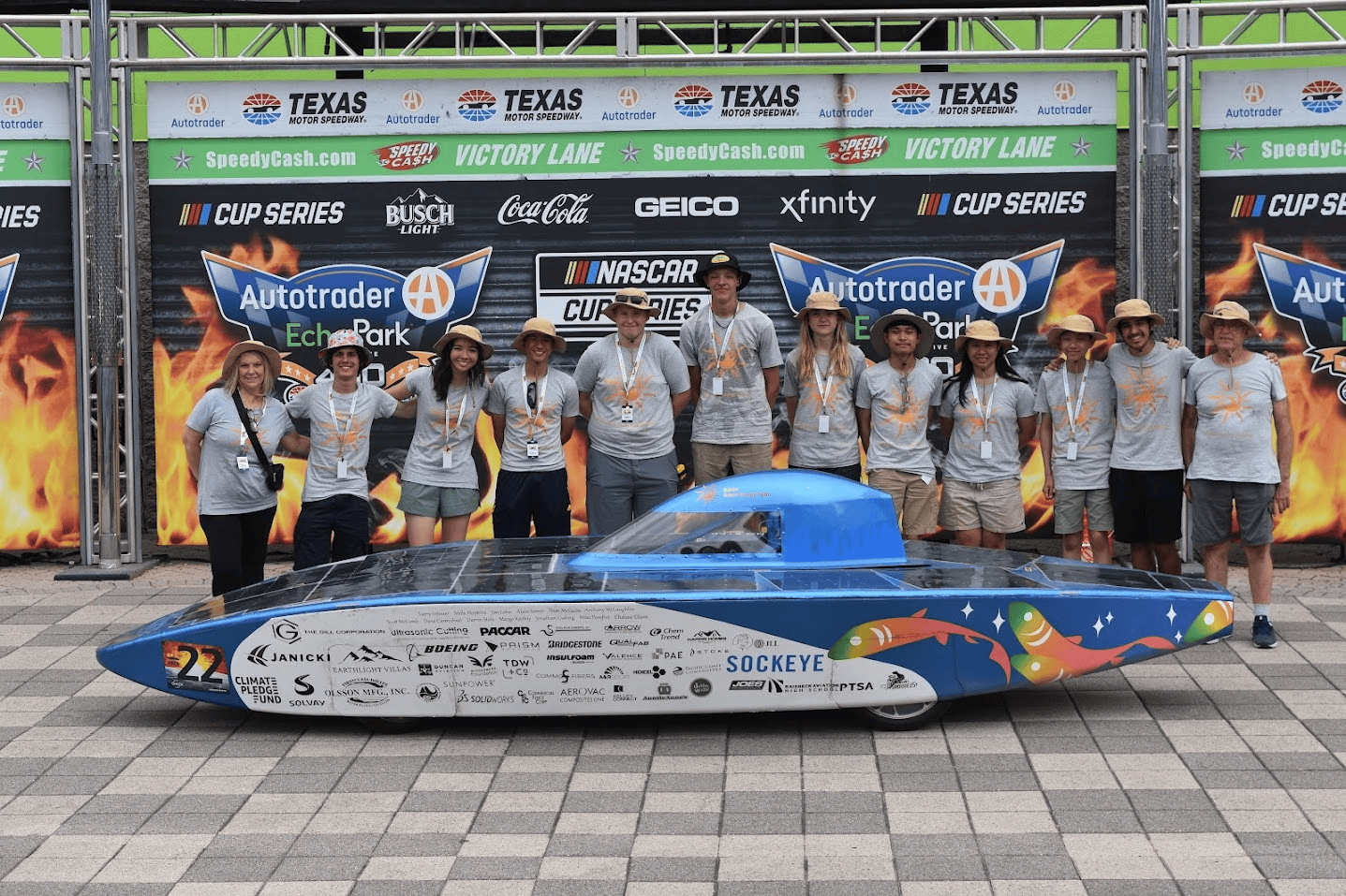
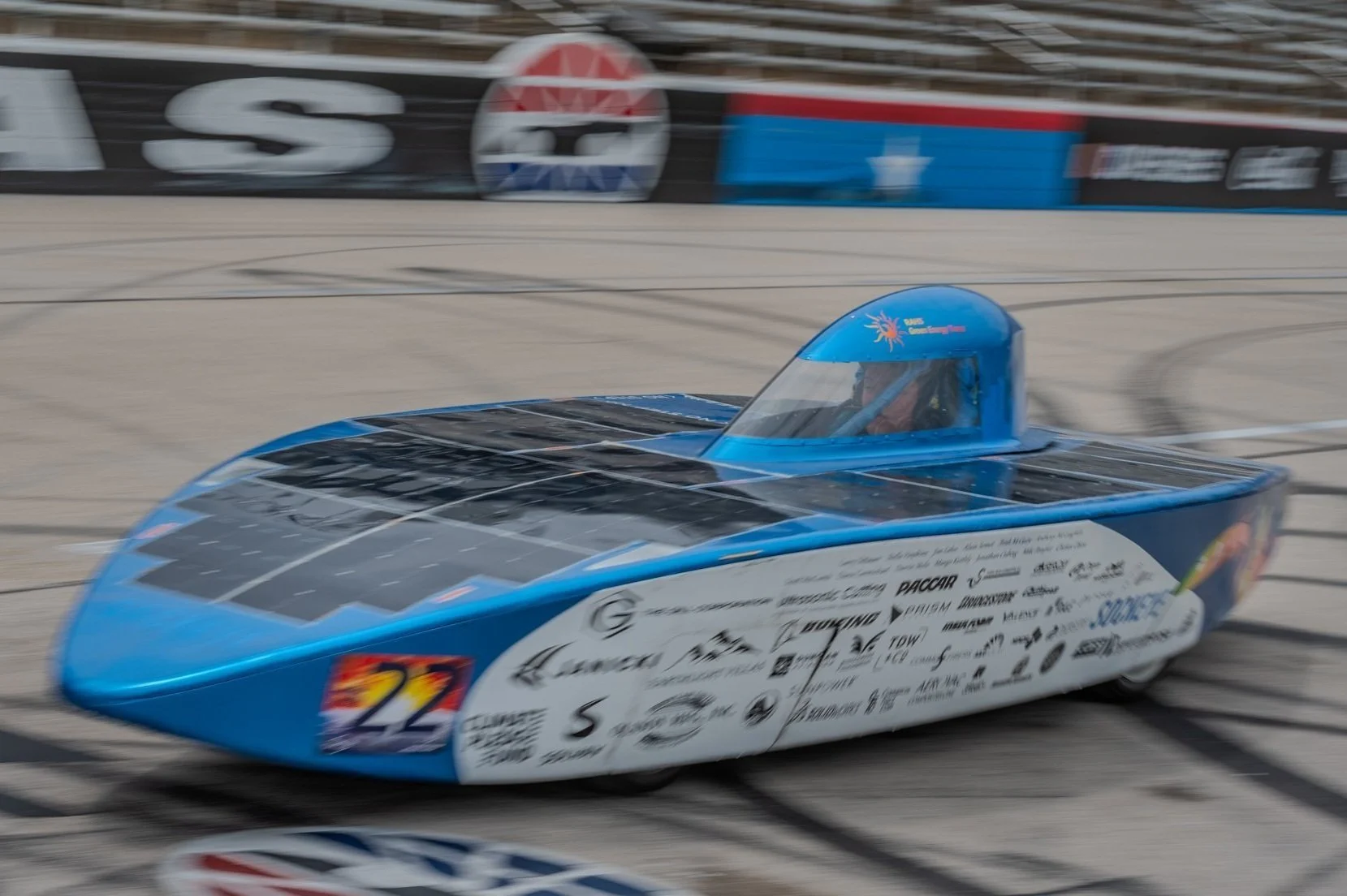
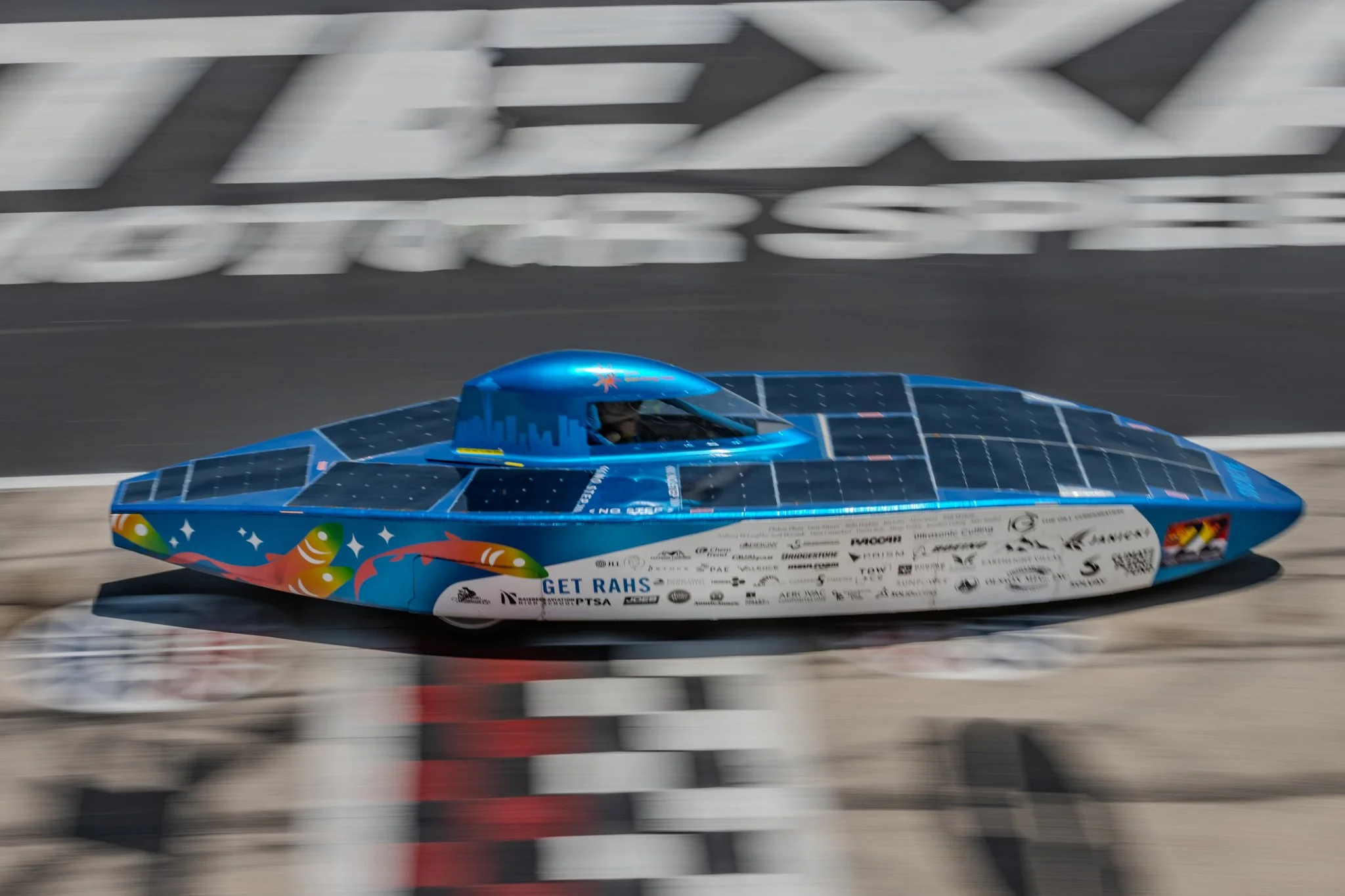
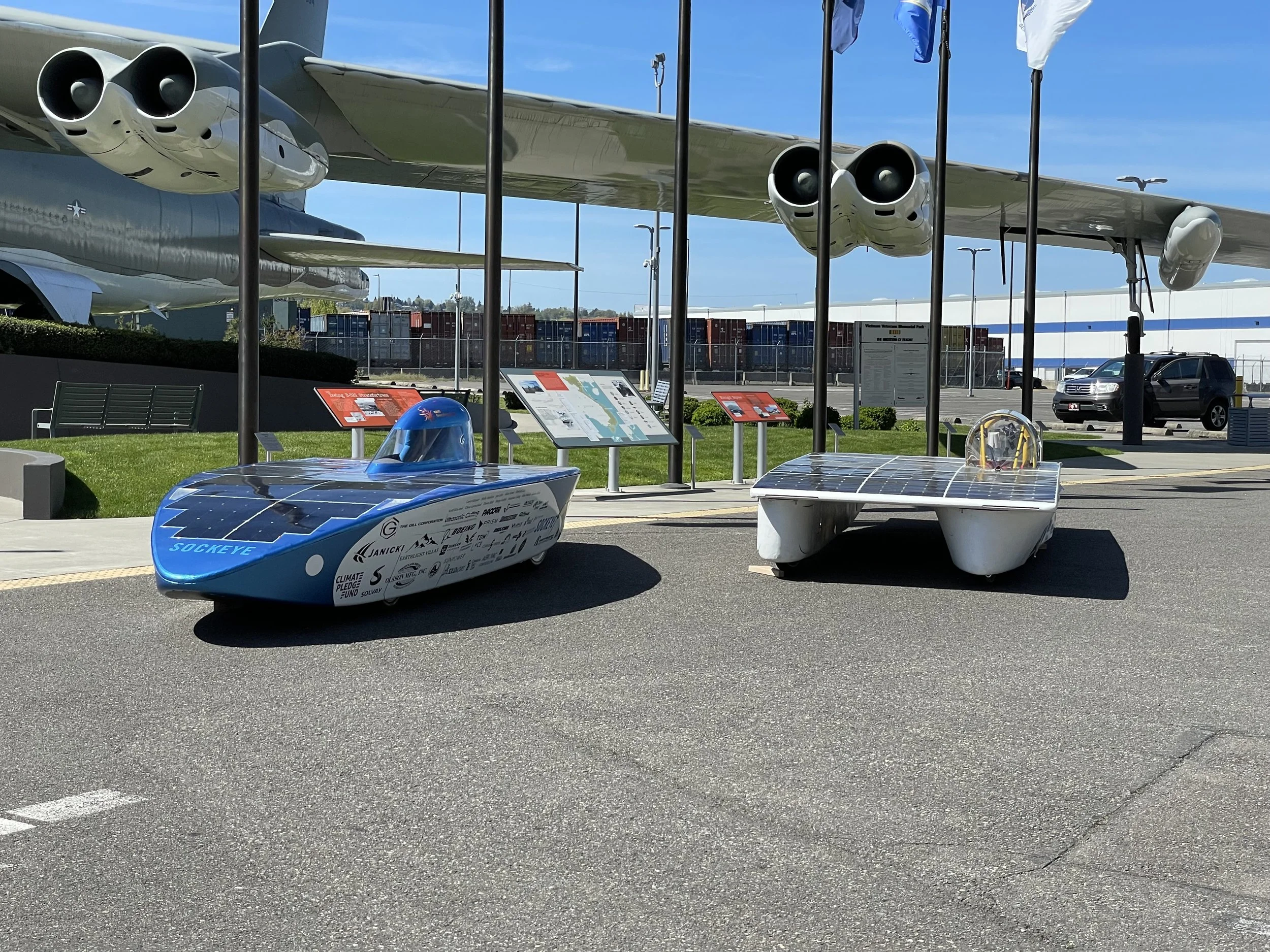
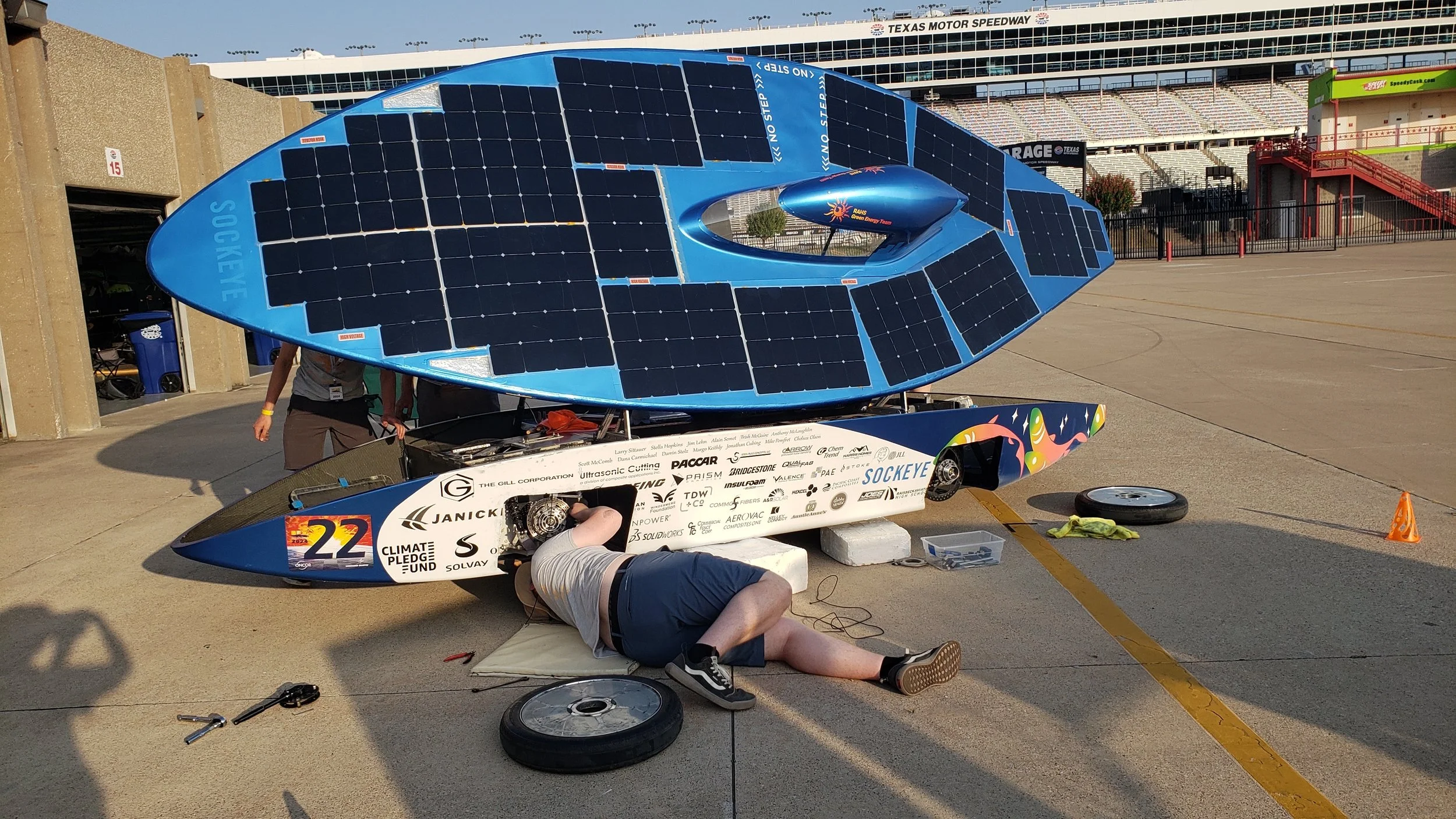
Sockeye was our 4th car, it was our first full composite car, and it was one of our hardest technical challenges. We had decided to build the car as close to the collegiate American Solar Challenge (ASC) specs as possible, limiting quite a few things. Most notable was the solar array, 2023 and 2024 ASC regulations limited the solar array to 4 square meters, whereas The Solar Car Challenge (SCC) allowed up to 9 square meters. Following ASC regulations, we created what was in its time our most efficient car, but our most power starved car ever. Racing in SCC would be a massive optimization problem, but through adversity comes learning…
In September 2022 we began the design work for Sockeye. By then we had set the goals for the car:
Build our first single body design (as opposed to a catamaran or overhead array design)
Design as close to ASC Specifications as possible, including the 4 square meter array
Create our first ever fully composite build
While this was a large task, the 2022-2023 iteration of our team was one of the largest in our history, and very competent at the task, and by the time December had rolled around, we were closing in on the design of the aeroshell, as well as the chassis and suspension. Meanwhile the electrical team was working on the battery as well as the low voltage control systems. To add more to the task list, the solar array production was about to get started. Meanwhile, logistics and fundraising members were working to raise funds and set in motion plans for the targeted 2023 Solar Car Challenge, which would be the first cross country race in our team history.
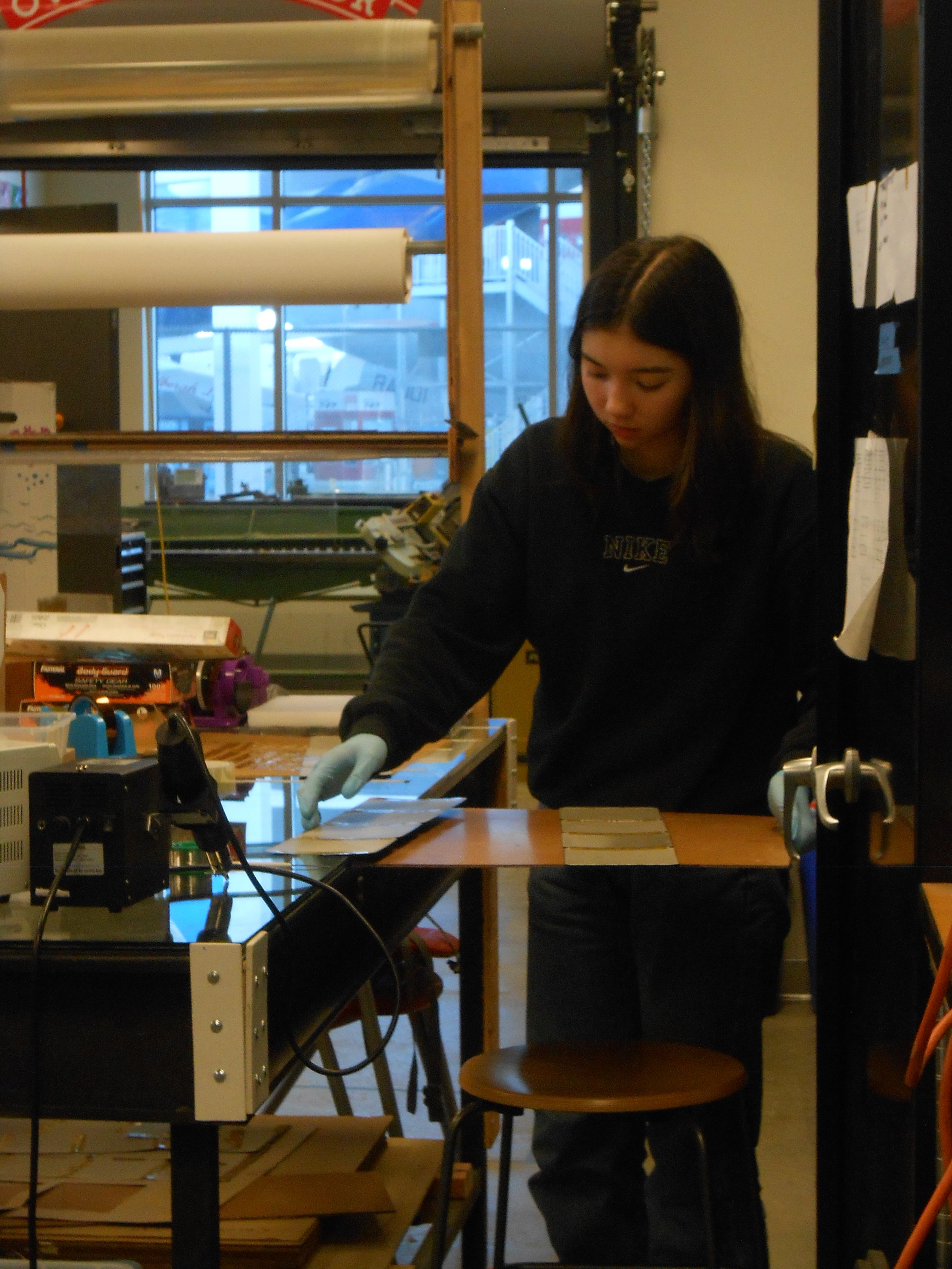
The initial build process and the refinements made the subsequent year would at the time be the most important and resource intensive process in our team’s history. In terms of technology, our 2019 car was our introduction. Sockeye is where we learned the advanced methods. There were a ton of tasks to do. Aerodynamics and structure took center stage for the mechanical team. Setting up the complicated simulations and tests to prove that the composite chassis was indeed safe for the speeds we intended to hit, and making sure that the aerodynamics would actually yield the efficiency to reach those speeds. On the electrical side we started moving forward the first year on the control systems and telemetry, but the major portion of upgrades would not take place till the next year. One pride of the team at this point was the solar array. Every solar cell perfect, because it had to be. Every single cell mattered.
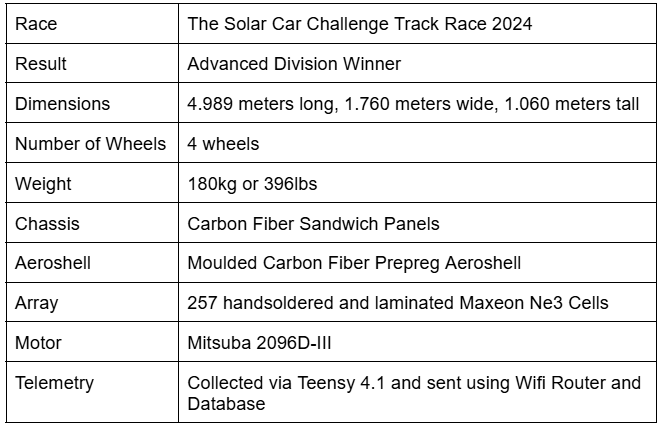
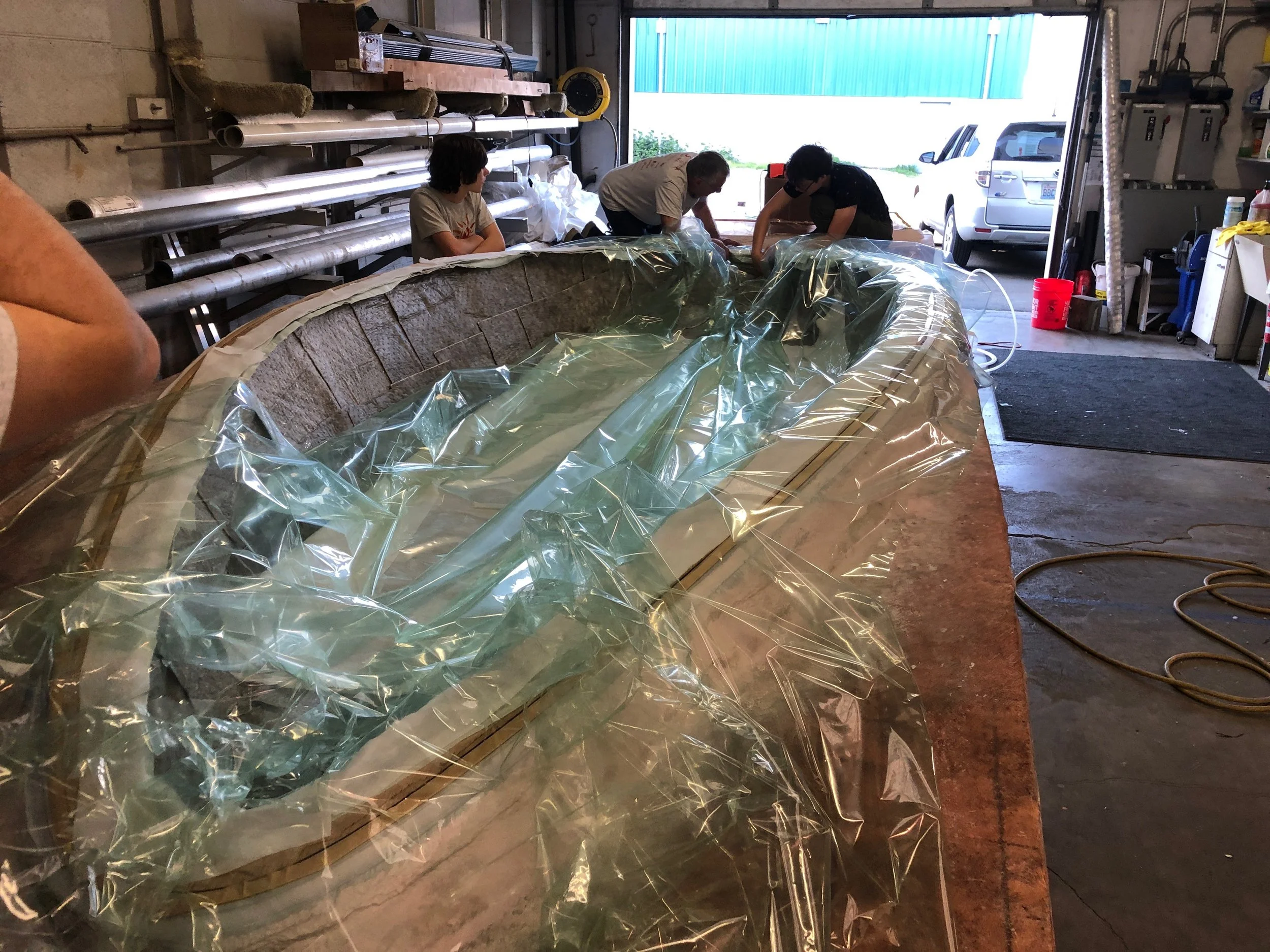
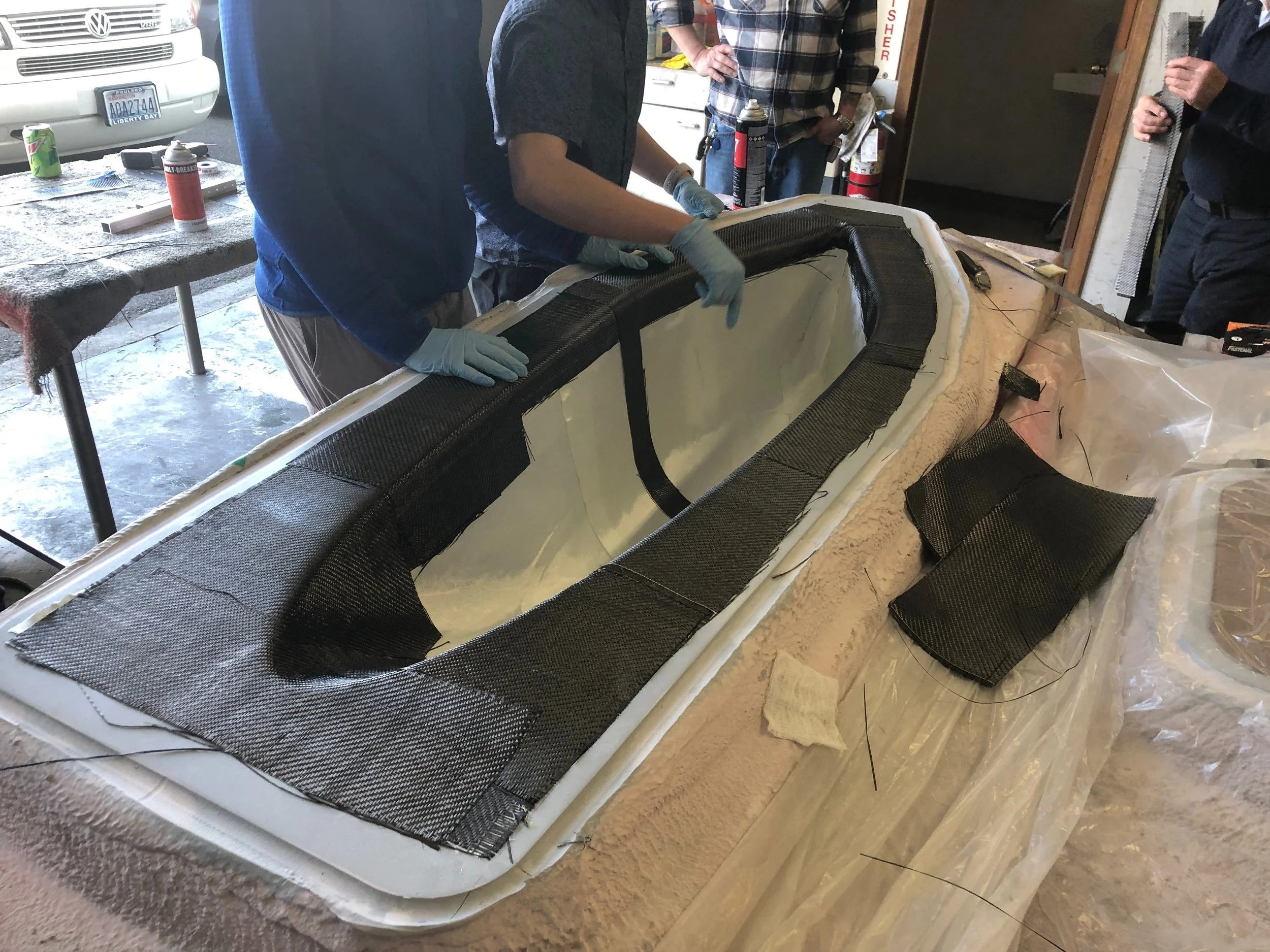
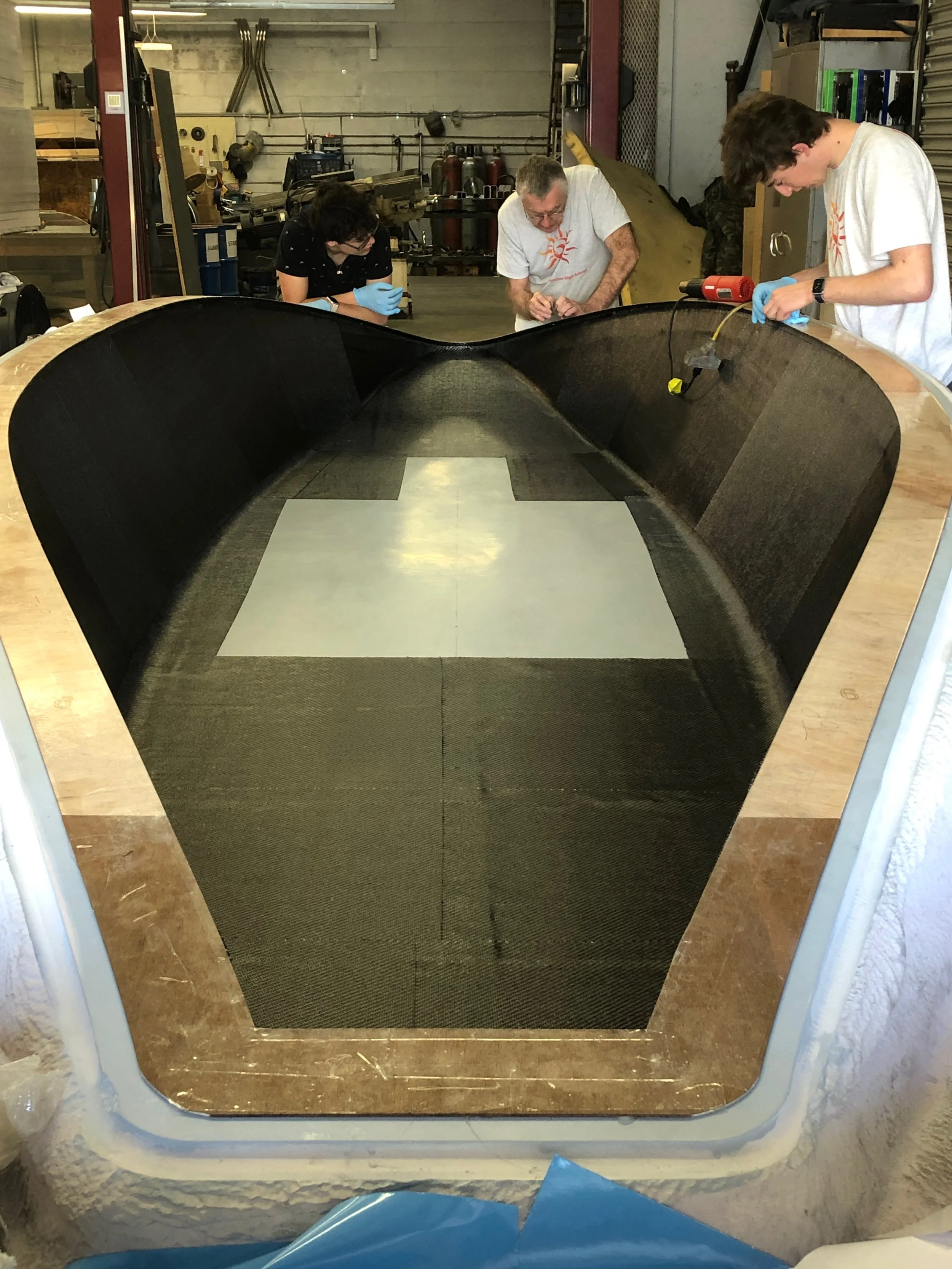
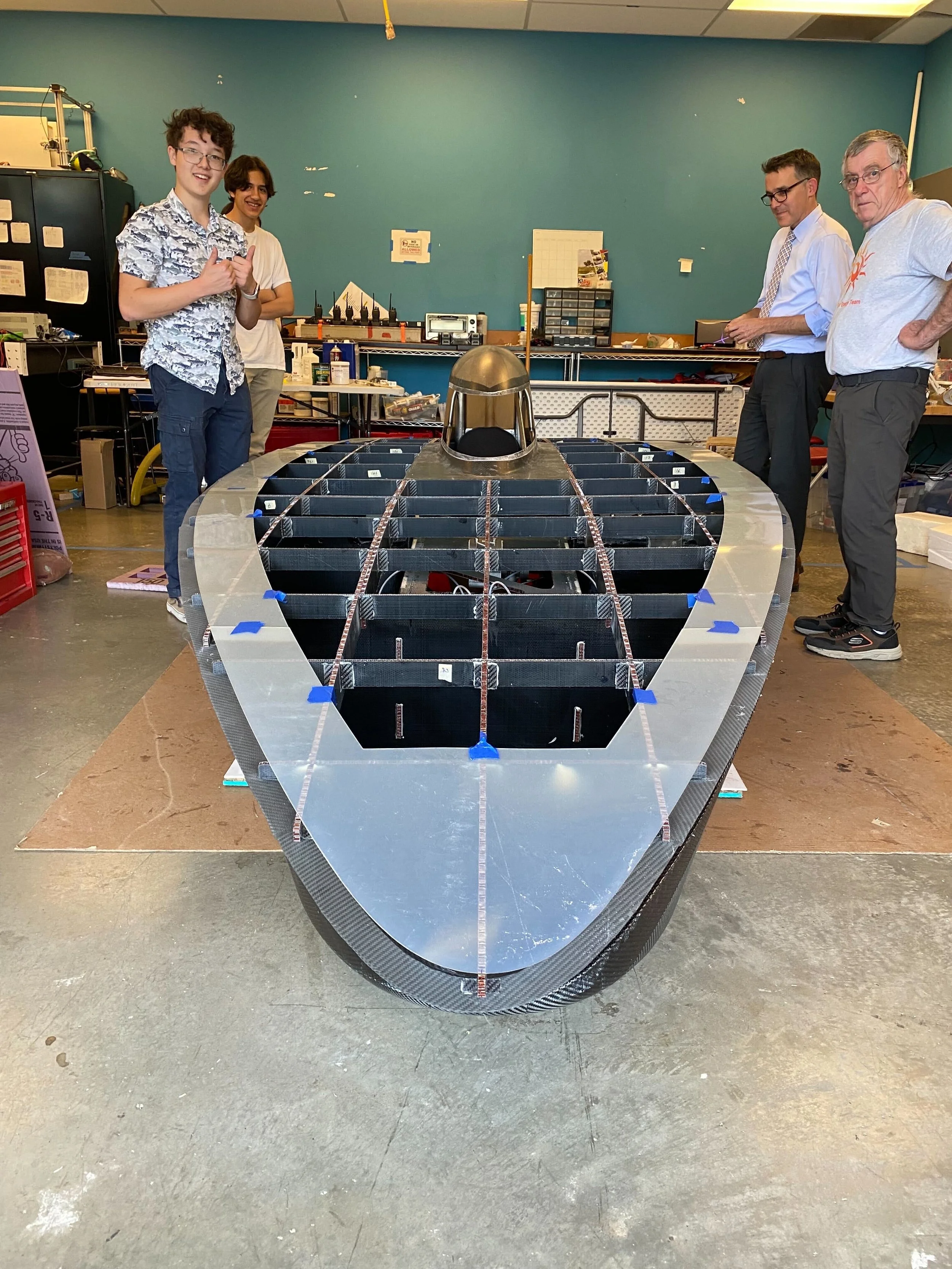
As winter progressed, we made more progress on mechanical systems, but perhaps most importantly, the aeroshell. The Sockeye aeroshell was a prepreg carbon fiber molded aeroshell, made on a custom mold generously subsidized by Janicki Industries. The mechanical team got to work sanding and prepping the mold for the layup. Meanwhile as winter turned to spring, the electrical team finished manufacturing the solar array, with extra care due to the reduced size of the array, and the exceedingly intricate telemetry system was programmed and troubleshooted. As we closed in on the final product, it was almost time to ship the car down to Texas, and testing became a regular occurrence as we tried to nail down problems and get an idea of how the car ran.
Unfortunately, a few days before we left, we got the news that due to an unfortunate circumstance with logistics, the team would not be able to take part in the race. This was a complete shock to everyone, and the morale of our team took quite a hit. Instead of racing in 2023, we did a mini race simulation, and then began prep work for the 2024 Solar Car Challenge.
The new year did bring on new opportunities though: time to optimize strategy and fix issues regarding the telemetry system. We would need the time, with the end of the 2022-2023 season, we would lose our entire strategy team, at a time when strategy was crucial to properly run the energy starved car.
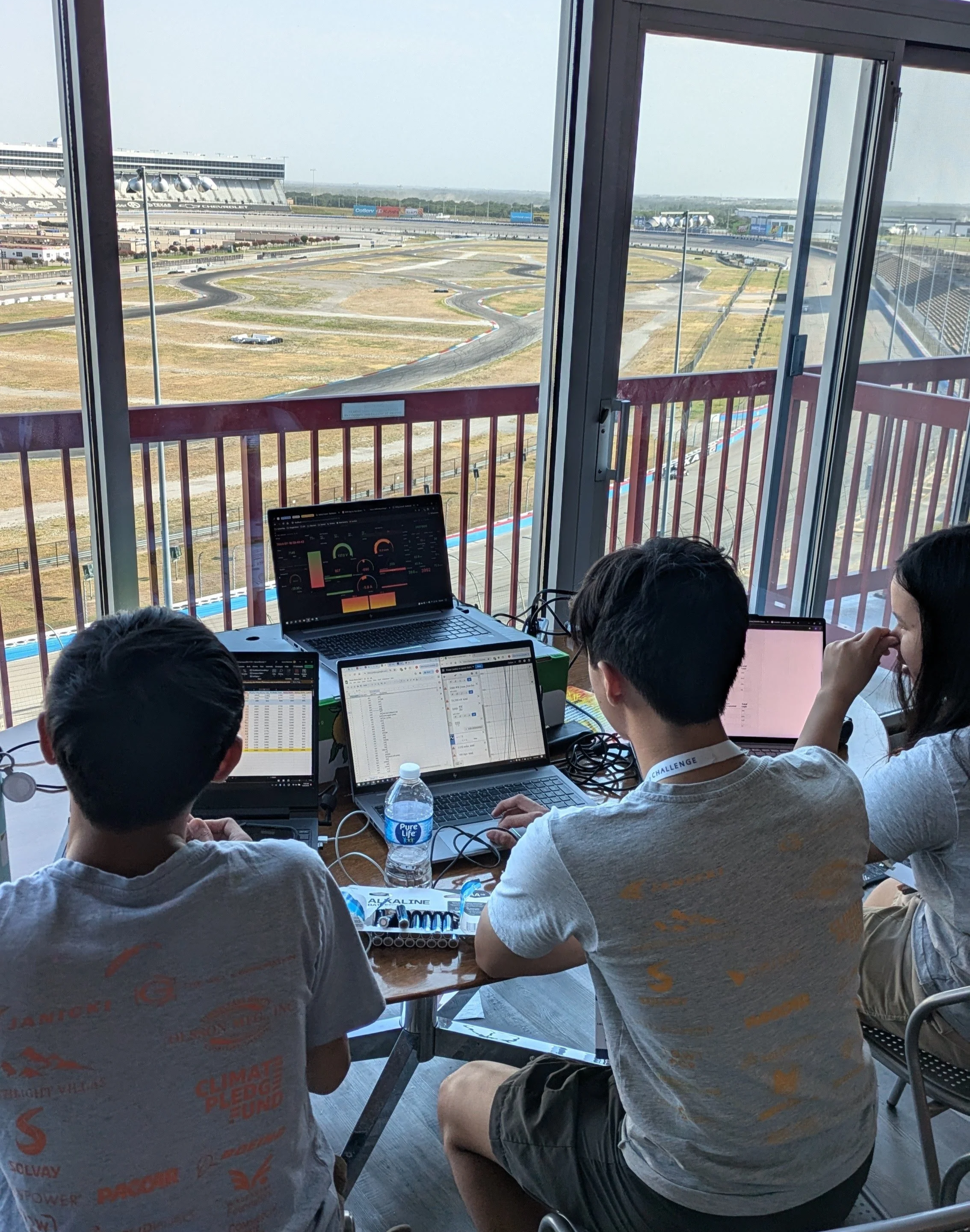
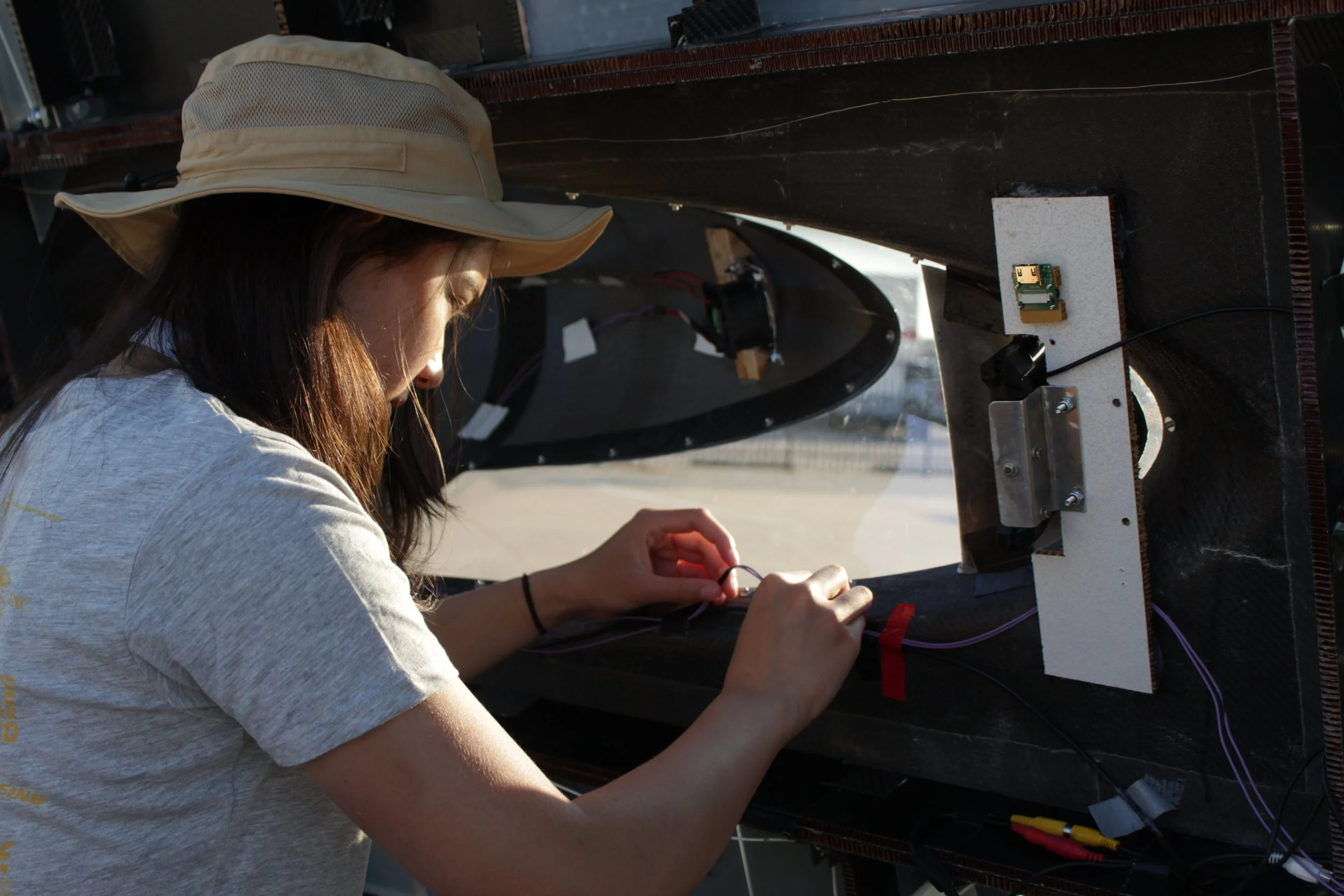
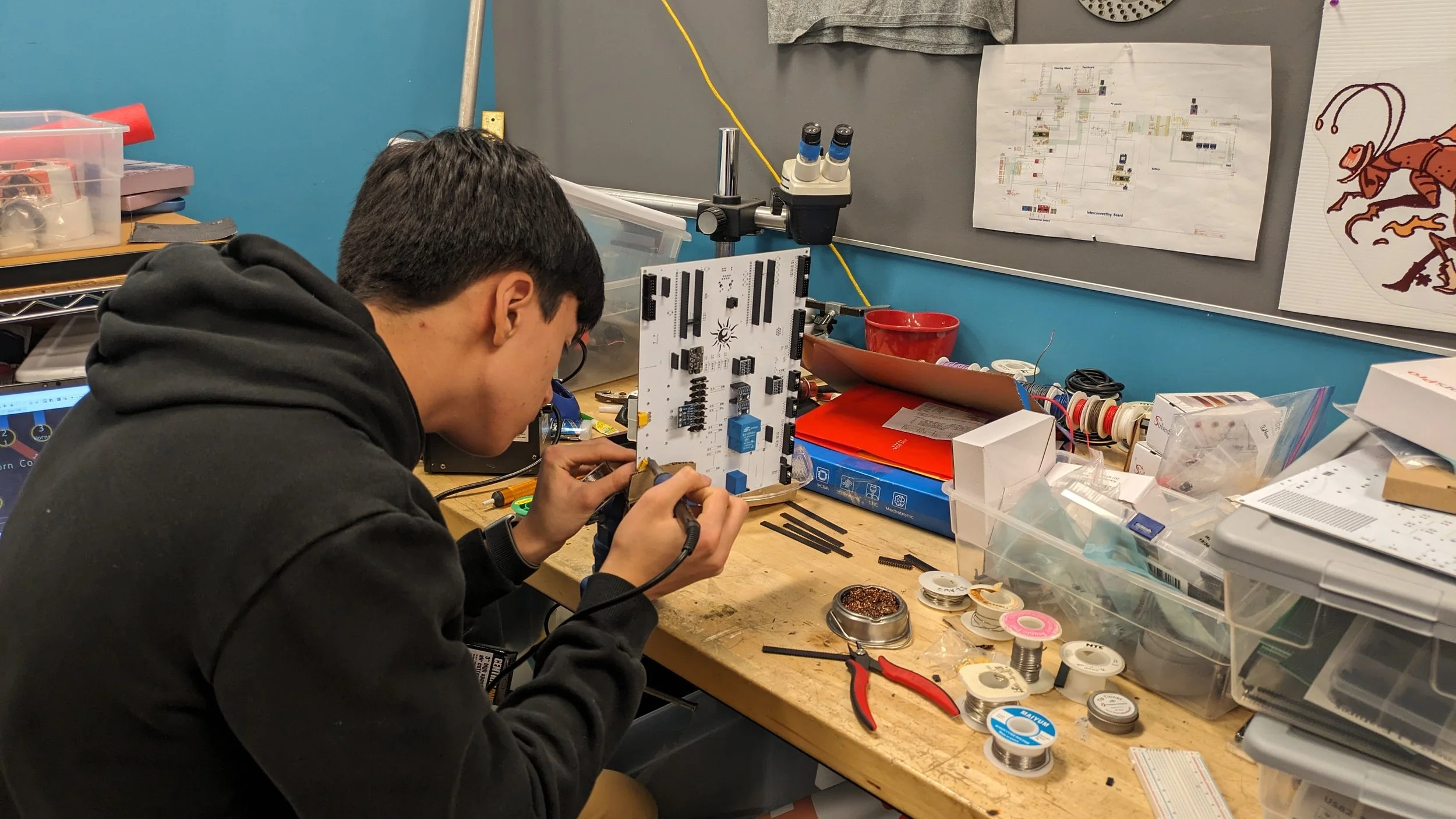
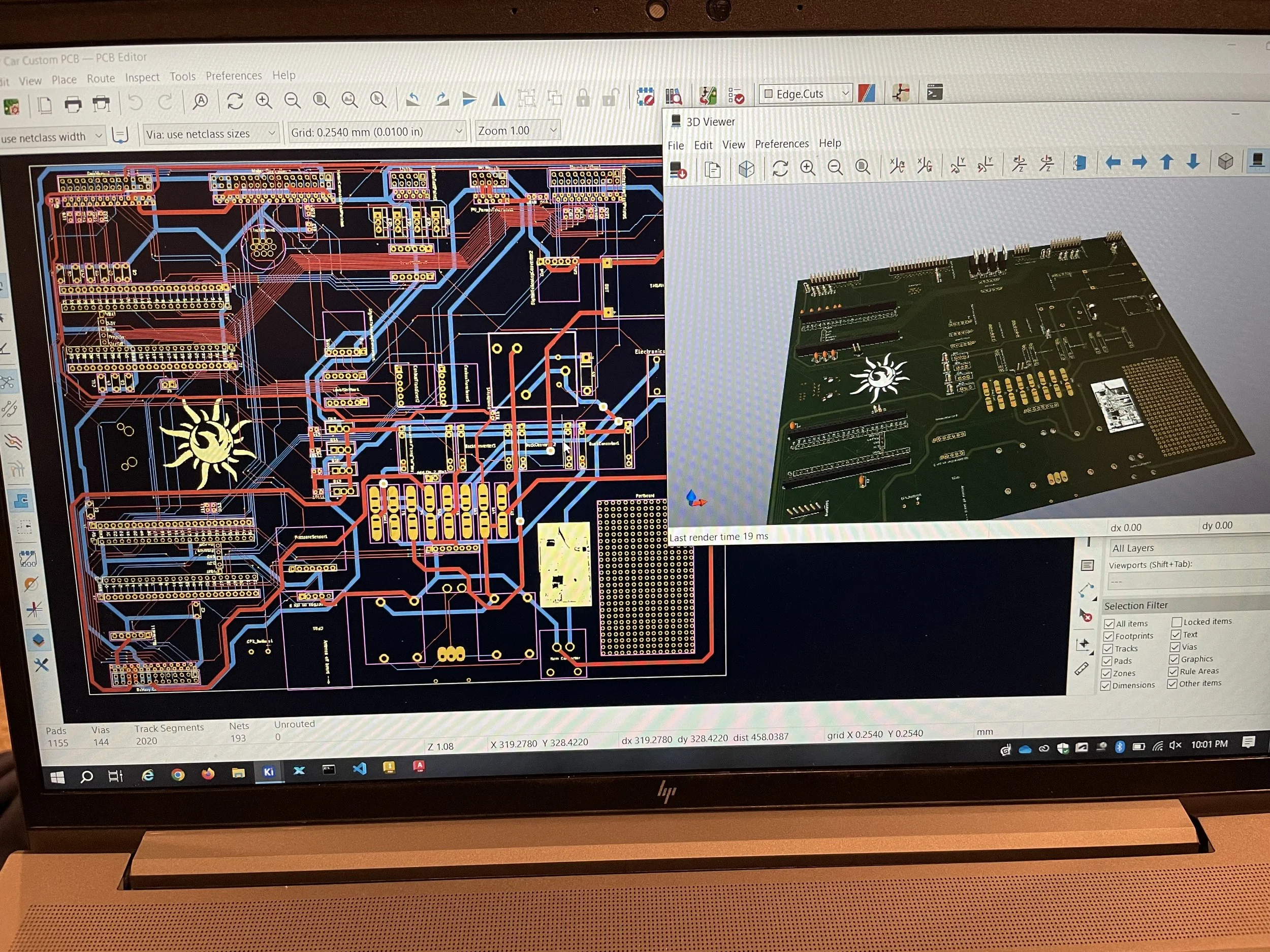
While the 2023-2024 season did not feature as many visible upgrades, it had some extremely important steps. The mechanical team optimized the brakes and suspension, and made tweaks to the aerodynamics. Electrical and software teams pushed forward during that year, spending countless hours troubleshooting the notoriously unreliable telemetry system till it functioned perfectly. Excitingly, a few members pushed forward a new tech for our team: custom printed circuit boards (PCBs) to replace the old perfboards we used. This would set the groundwork for future electrical projects and advances.
Perhaps most importantly, in the leadup to the 2024 Solar Car Challenge, a few underclassmen completely rebuilt our strategy system from the ground up. The problem they solved? How to win a race with less than half the solar panel area available. With over a month and a half of testing efficiency at every possible speed, and utilizing the elaborate telemetry system, as well as a race result and competitive analysis calculator we built, we were ready to take on the 2024 Solar Car Challenge.
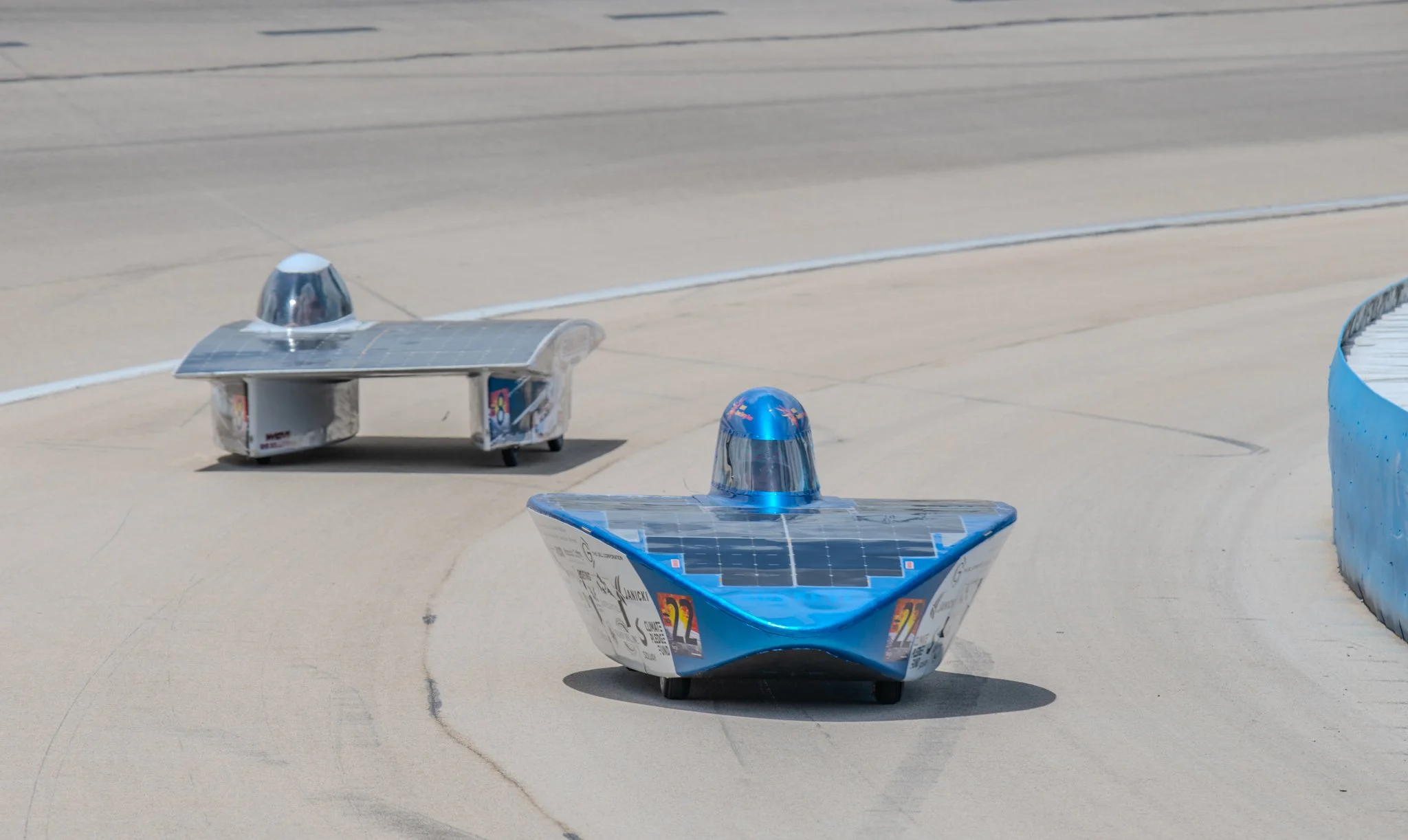
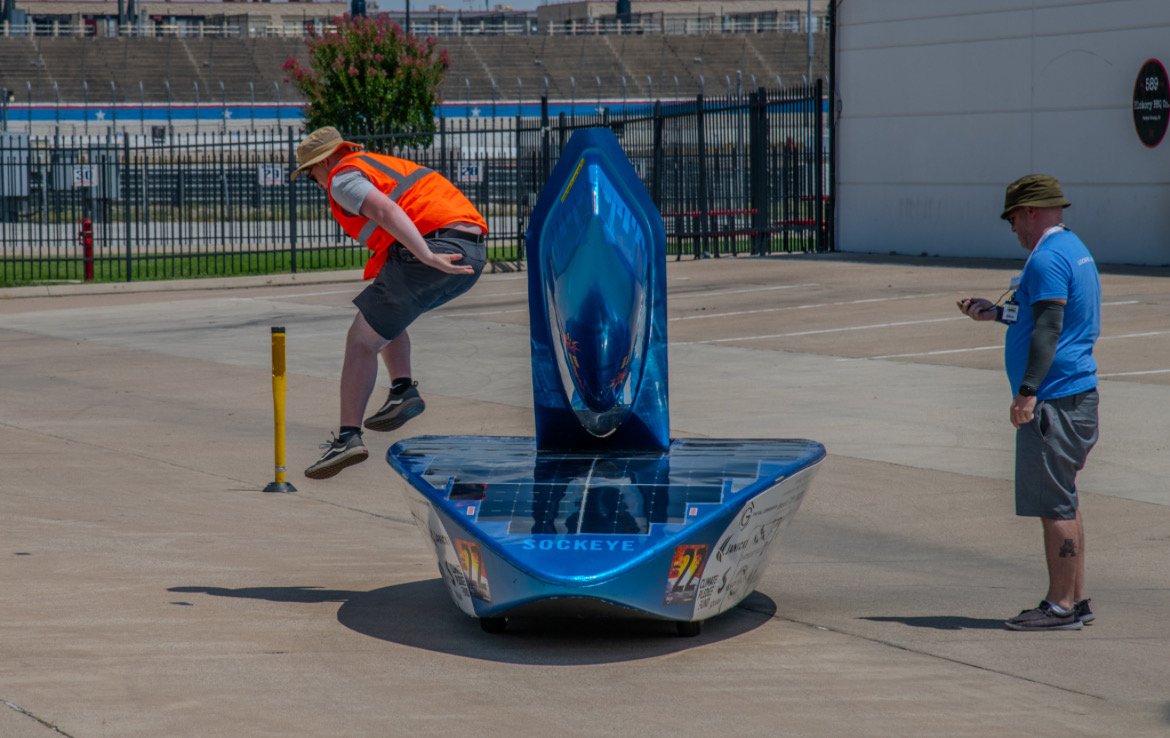
Arriving at the Texas Motor Speedway for the first time in 2 years, with an energy starved car, we knew that nothing less than perfect race execution would allow us to have a chance, especially against one of the best cars that the other teams have built in the last few years. Clearing through scrutineering, we only faced issues around battery placement and egress, but both were solved with some clever engineering, and soon it was time for the race.
The 2024 race was the closest our team has ever had, facing off against teams with more than double our solar array size, leading to a massive mismatch in available energy. Ending Day 1 only 4.5 miles ahead of the 2nd place challenger, and due to the small solar array, we could only drain the battery by around 40% each day to start with a full charge. We were understandably very nervous, and things would only get worse on Day 2.
Day 2 would cause a lot of chaos for the team, Challenge mandated heat protocols forced teams to swap drivers more often. Additionally, the telemetry system started to glitch, and an hour later, it completely ceased functioning, leaving our strategy team to run blind, trusting the models. Around midday, the heat got worse. Fearing a cancellation of the race day and getting penalized for not taking the mandatory lunch break, we decided to pit at the worst possible time during a time when the track was practically empty. After half an hour we got back on track, but were unable to fix the telemetry system, so we would try to finish the day blind. As a final gut punch from Day 2, with 45 minutes of racing to go, Sockeye came to a halt on turn 2, apparently disabled. After about 10 minutes of troubleshooting, the driver realized it was the fuse, and Sockeye was able to drive off the track under the its own power, but that would end the racing day for us. Now nearly 15 miles down, we would need to operate perfectly on Day 3 to take the lead back, and to make it worse we were heading into a full sun day, giving advantage to the larger arrayed cars.
Day 3 was the day we struck back, a fresh night of sleep and some extra energy due to the off-track time on Day 2 let us run FAST through the Texas heat. All the teams in our division ran fast all day, but our strategy team had figured out how to use the track and energy to our advantage, and with some clever energy management and track positioning, we clawed back the miles hour after hour, starting the day almost 15 miles back, and ending the day almost 10 miles ahead, outpacing the larger cars even in the full sun.
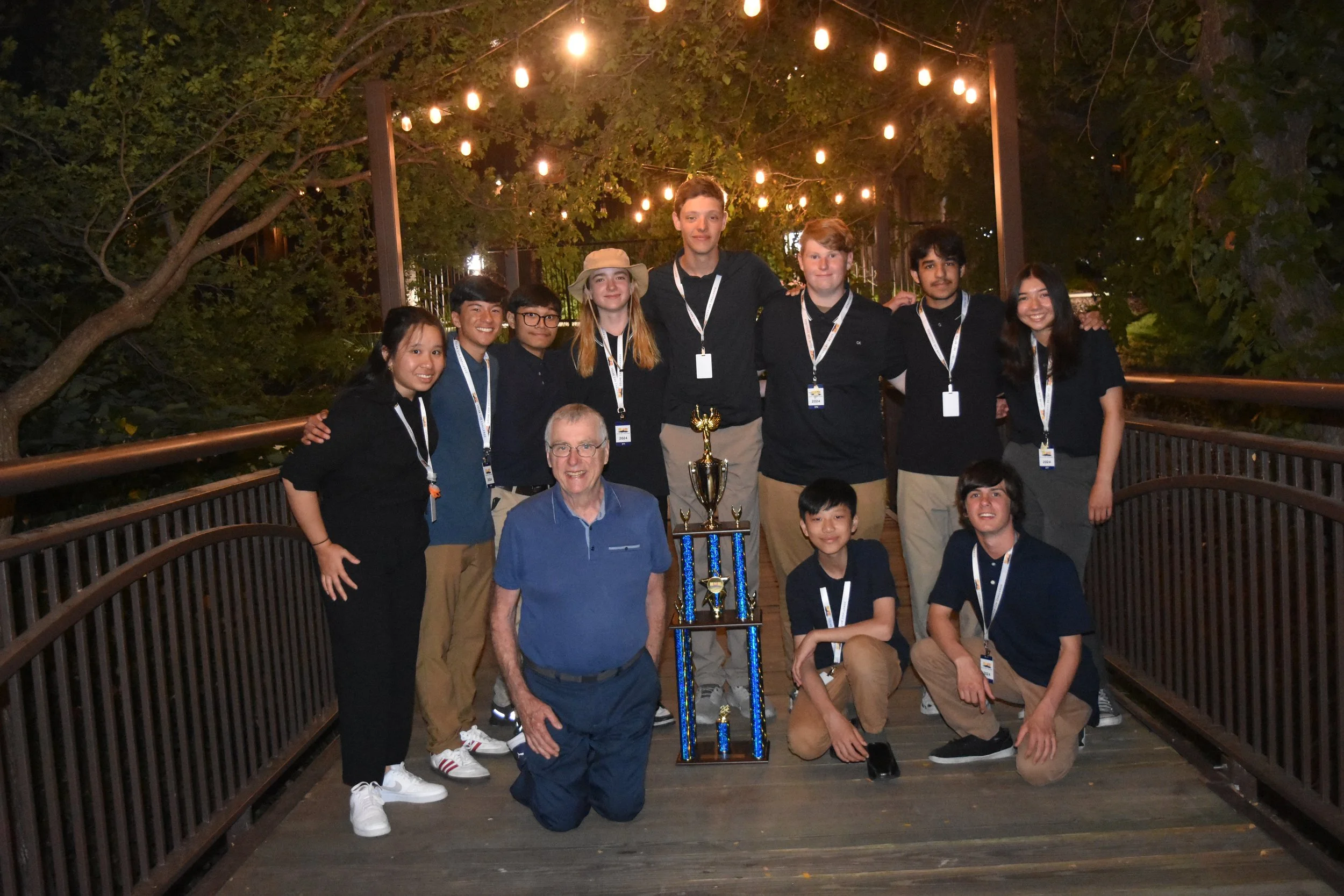
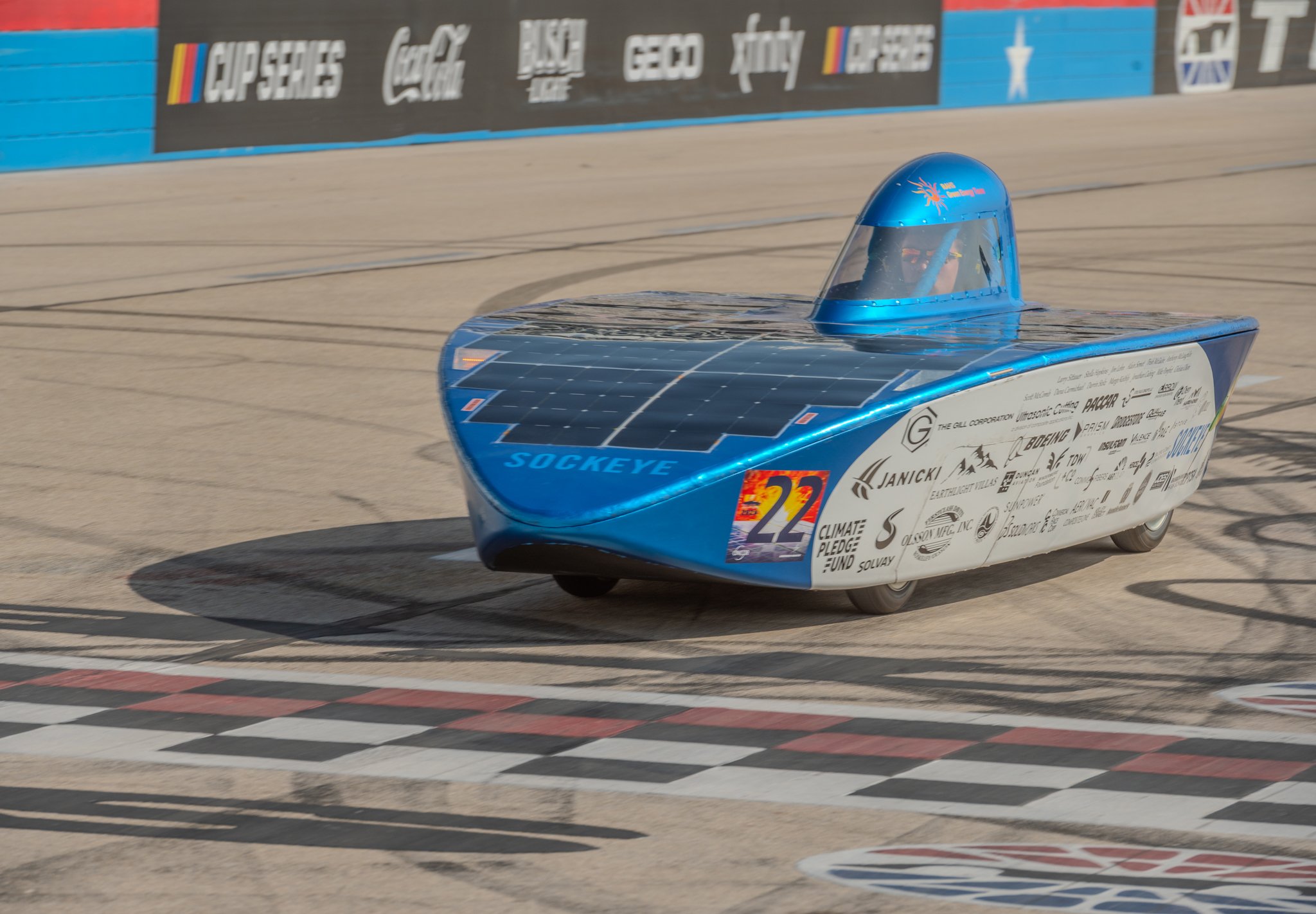
Day 4, the final day, was just as we’d hoped and planned for: completely overcast. We had the lead, and without sun to power the larger cars, we also had an advantage heading into the day with the smaller and more efficient Sockeye. While we started out conservative in our pace, as the day went on we upped our pace as we had more than 50% battery left with an hour and a half before the early cutoff due to expected rain. Coming into the pit at the end, we did it. We had completed the race, and won the division, with less than half of the allowed solar area.
Despite us not being able to go to 2023 Solar Car Challenge, and the extremely tight 2024 Challenge, we had learned so much through this car, and had pushed our understanding of design, composites, electrical engineering, and strategy to new heights. This ending was also bittersweet, as with many of the team's members graduating, and a lack of logistics, the team was unsure if it would continue in the new year. But as we know now, the learnings and grit from this car would continue in the next iteration of the team, in one of our darkest hours.
Our Sockeye car was transferred at the end of 2024 to the new University of Washington Solar Vehicle Team, and competed in the 2025 American Solar Car Challenge
“Technical prowess and perfect execution”


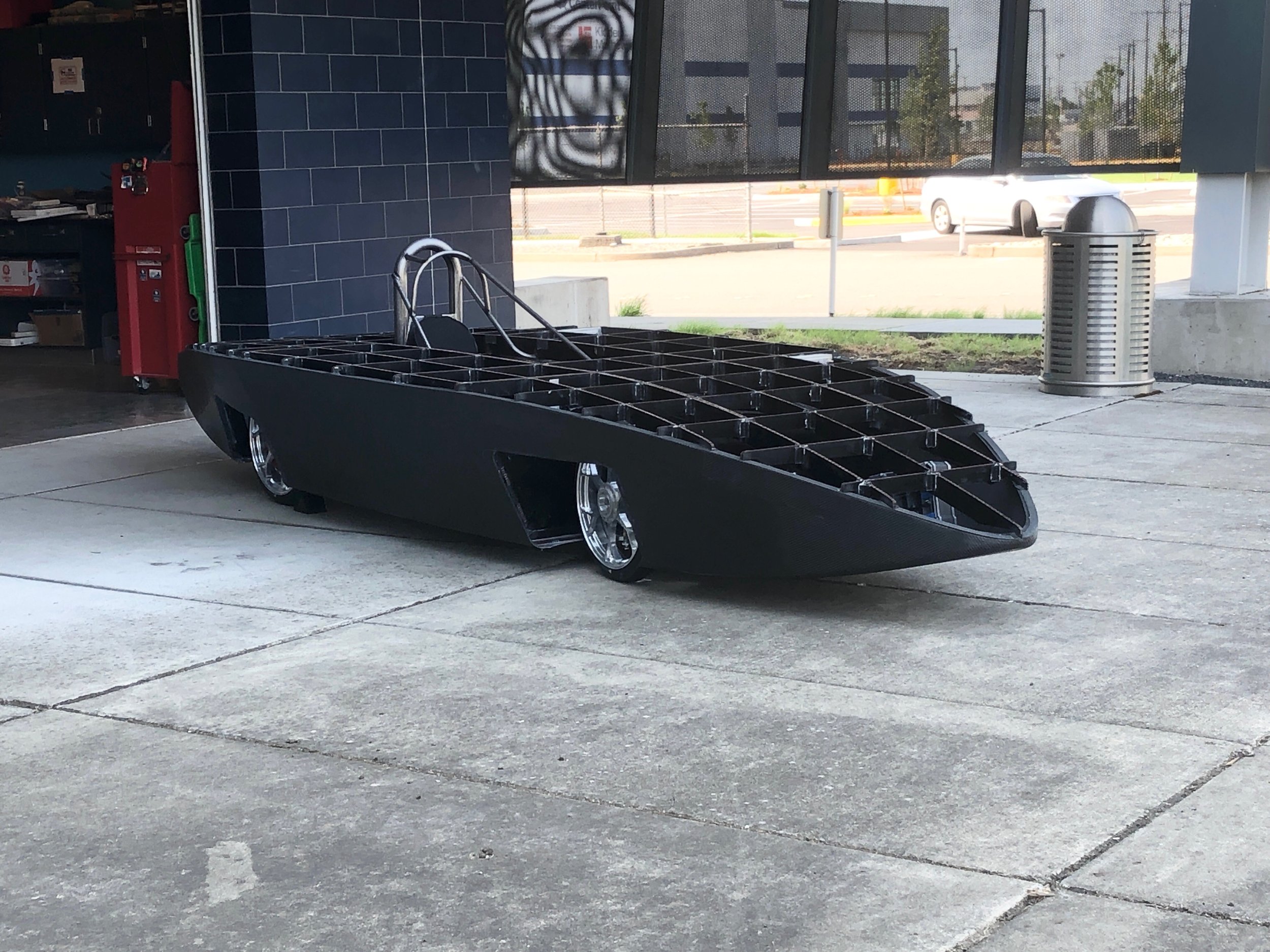
Carbon Fiber Chassis
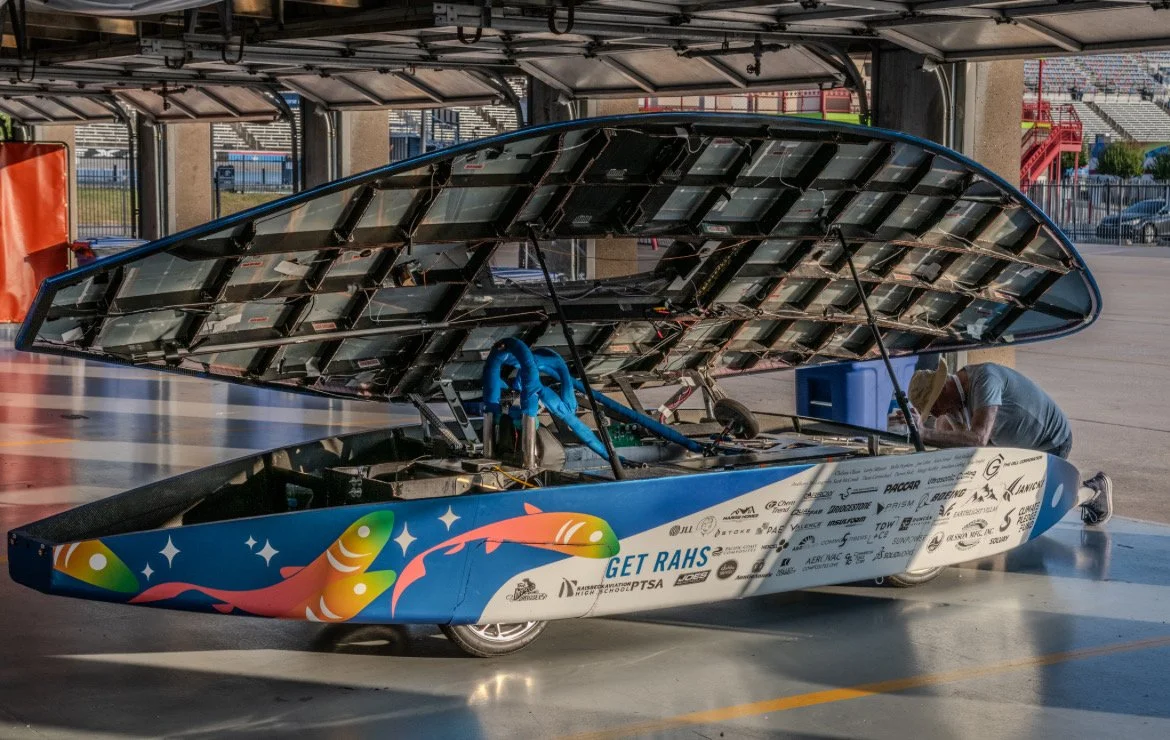
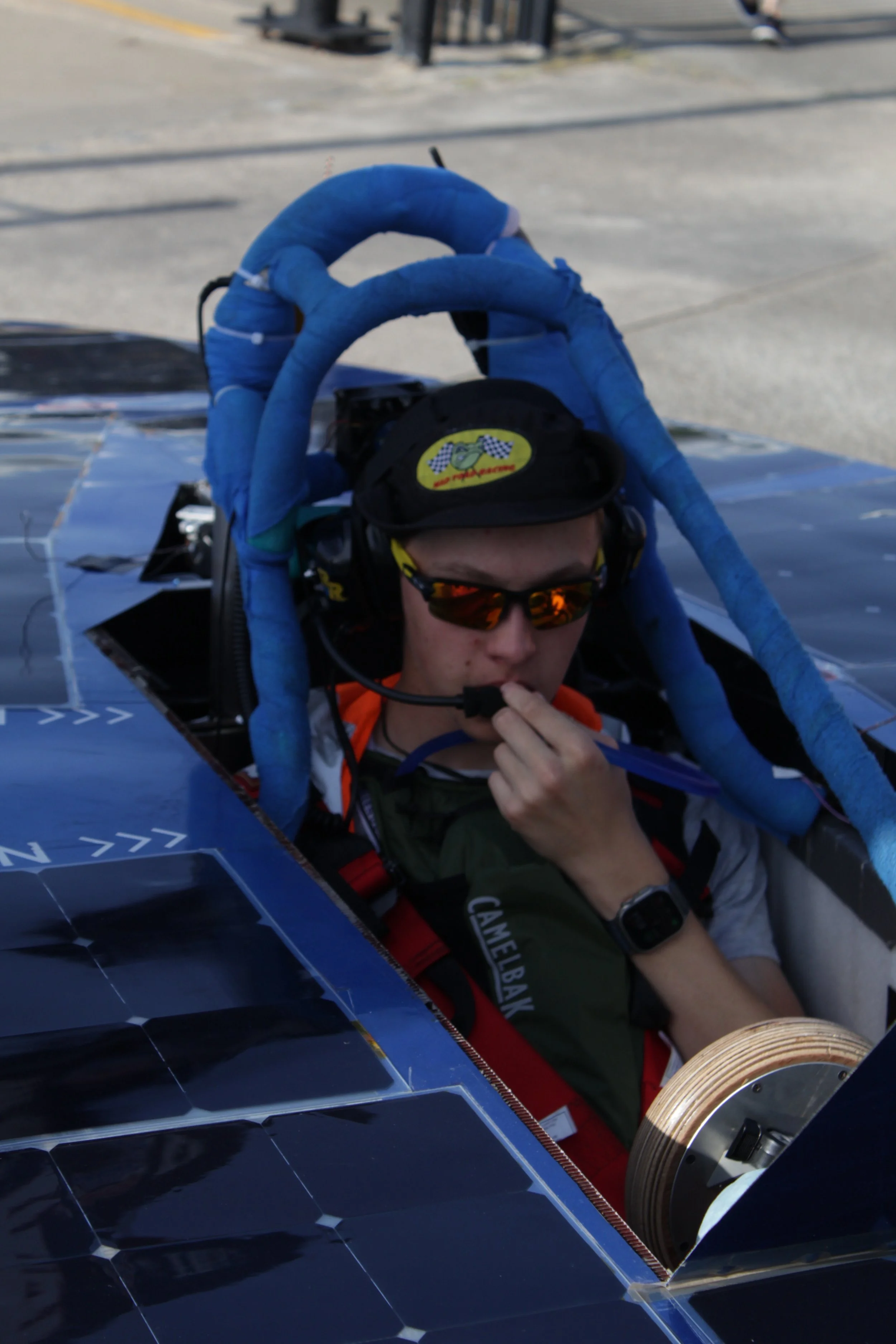
Sockeye was our very first car with a carbon fiber chassis. Because of this we took a very long time to design and simulate it to ensure safety and rules compliance. Additionally, destructive testing was carried out to ensure the driver would be safe in the event of a crash or rollover.
Molded Carbon Prepreg Aeroshell
Sockeye was also our very first car with a full aeroshell. Contrasted against cars like Jimmy (2022) or the Lean Green Driving Machine (2019), which used things like fairings or airplane fabric to achieve aero-body elements, Sockeye featured a molded aeroshell for the entire car. This was an extremely intensive project but it paid off in the aerodynamics of the car, and this will be a strategy of aerodynamics we will return to in the future.
Single Body Construction
Sockeye has another first for our team, being the first single body or “bullet” car we built. Designed this way, partially as a challenge for the team, and partially as a way to improve aerodynamics, we would iterate upon the design and use similar philosophies going forward.
In-House Array
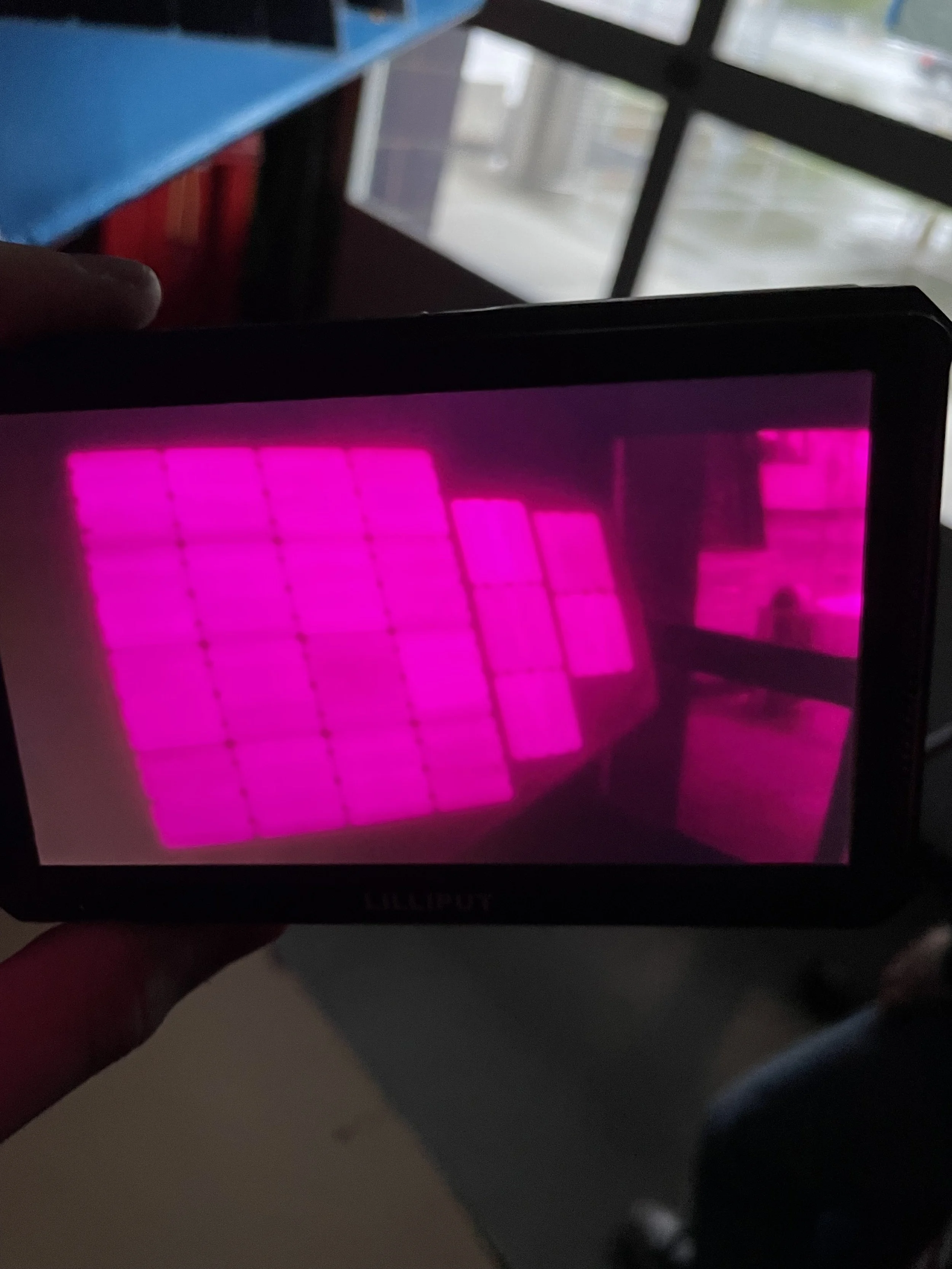
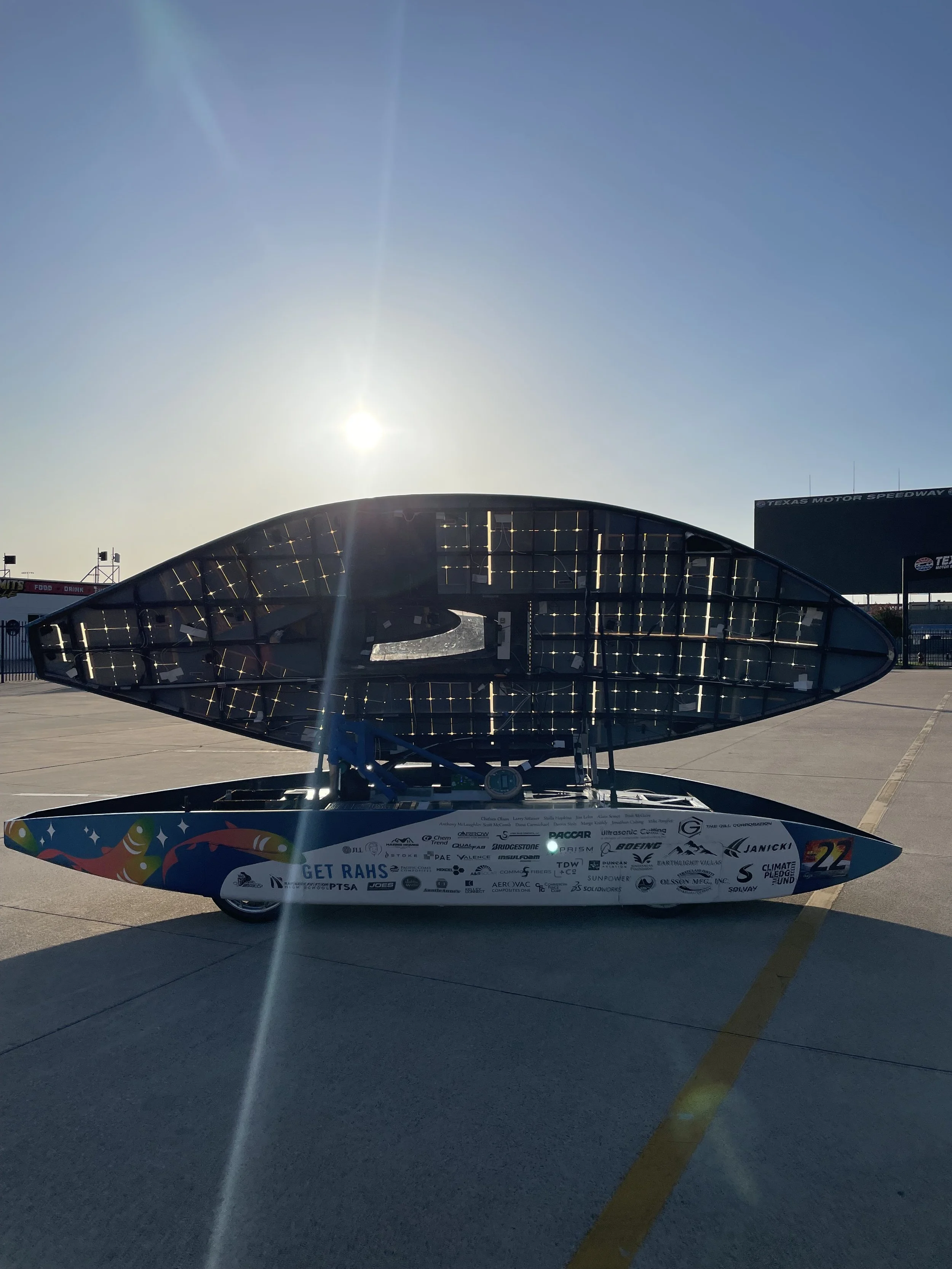
One aspect we are extremely proud of on Sockeye is the solar array. While not our first in-house soldered and laminated solar array, this one was the best one yet for the team, as with the reduced solar cell count, every single one mattered. Redone more than a few times, the quality on this array was so good that it was only a few watts off of the optimal power that the cells could collect.
PCBs
Another win for the electrical team, this is the car we pioneered custom Printed Circuit Boards for the team. This would allow us to have more reliable, and more advanced electronics, and would be a major stepping stone moving forward.
Race Strategy Improvements
Finally, one of the parts that Sockeye forced us to improve was race strategy. Despite working from the ground up again, we created a super effective system, designed to utilize the weird properties of racing Sockeye in The Solar Car Challenge. This way of thinking would not only help us win the race, but would redefine future design philosophy and guide future strategic endeavors.