
New Rules, New Challenges

Four days ago we revealed that we intend to race in the Bridgestone World Solar Challenge (BWSC), but what does this really mean? BWSC is a challenge held every two years in Australia, running 3000km from the northern city of Darwin to the southern city of Adelaide. We intend to compete in this in 2027, and it shares some key differences in engineering from the challenge we typically attend: The Solar Car Challenge (SCC).
While the two challenges have a significant amount of changes, the main differences between SCC and BWSC that affect our entire design and operations are involved with the conditions of the race, the rules around supplemental batteries, and also the consequences of strategy.
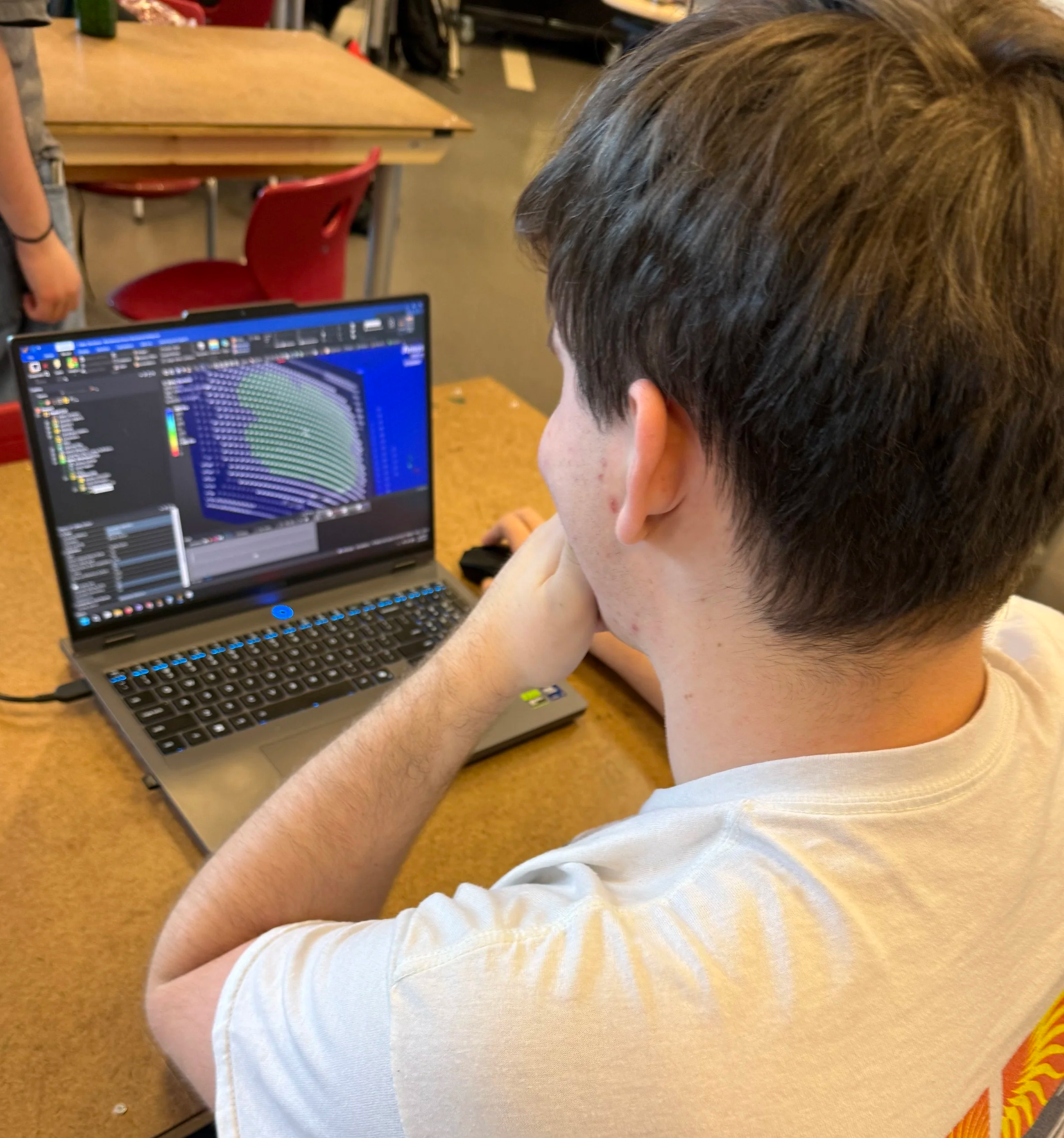
Alex (11) working on composite simulation for the Chassis
The most obvious change is the conditions the car is designed for. When we race down in Texas for SCC, we deal with very little crosswinds and summer weather, but also a lot more turning at speed. Thus we design the car to be more maneuverable but also less resistant to crosswinds. BWSC is held across the open roads of the Australian Outback, often in the Australian winter or spring. This adds two main design constraints for our mechanical team: design the car for the absolute best possible efficiency in a straight line, and design the ultralight vehicle to be able to withstand the gusts of wind sometimes greater than 100 kilometers per hour.
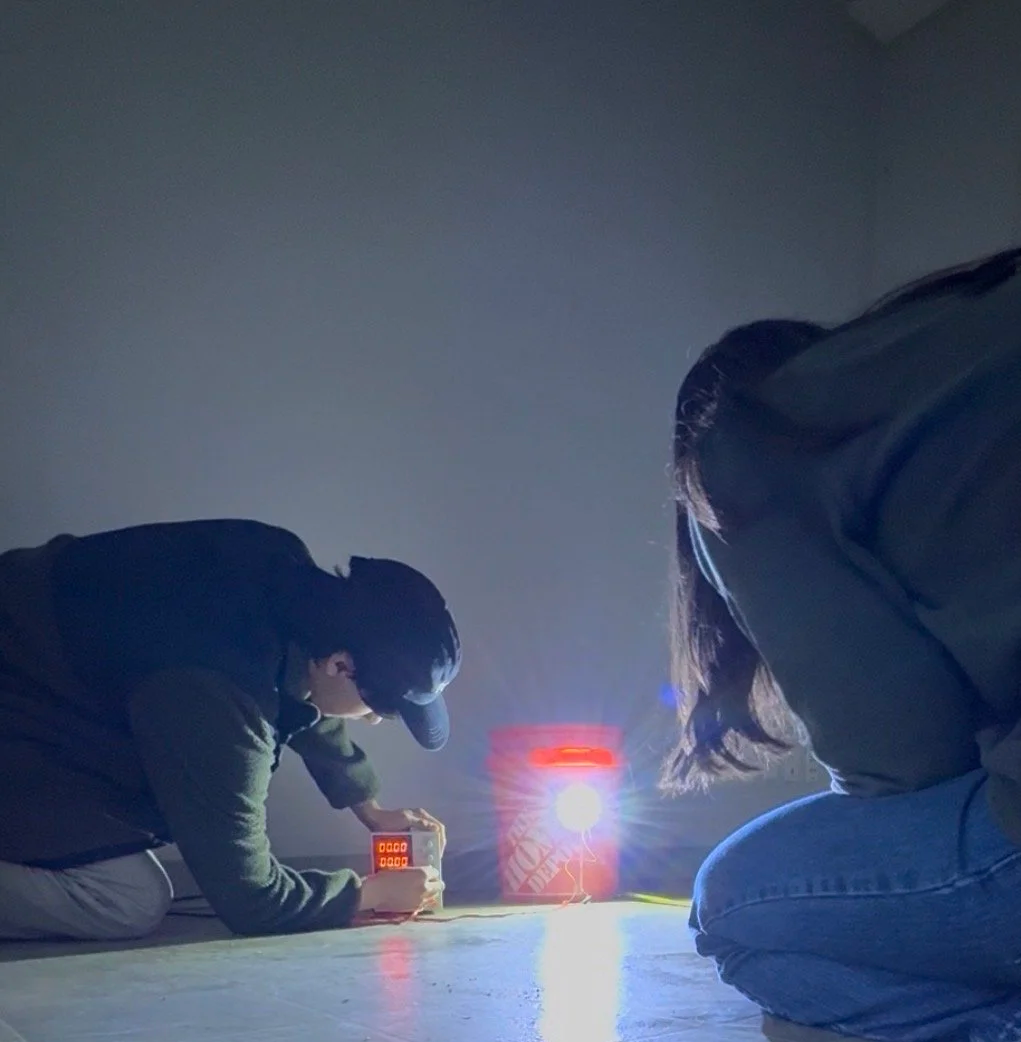
Caden (11) and Hika (12) testing luminous output and efficiency of custom built lights.
The other main technical piece for our team when it comes to the car itself, is how everything is powered. In SCC, we build a main battery which powers the motor, and this battery is recharged by the solar panels. Everything else is powered by a supplemental battery which we can replace whenever we wanted. This supplemental battery does not exist in BWSC. Everything, including lights, the horn, and supplemental system are all powered by the same energy that drives the car forward. This means that in order to do well, they must also be efficient, and significant thought must be put into isolation and safety systems to ensure the high voltage main battery stays safe.
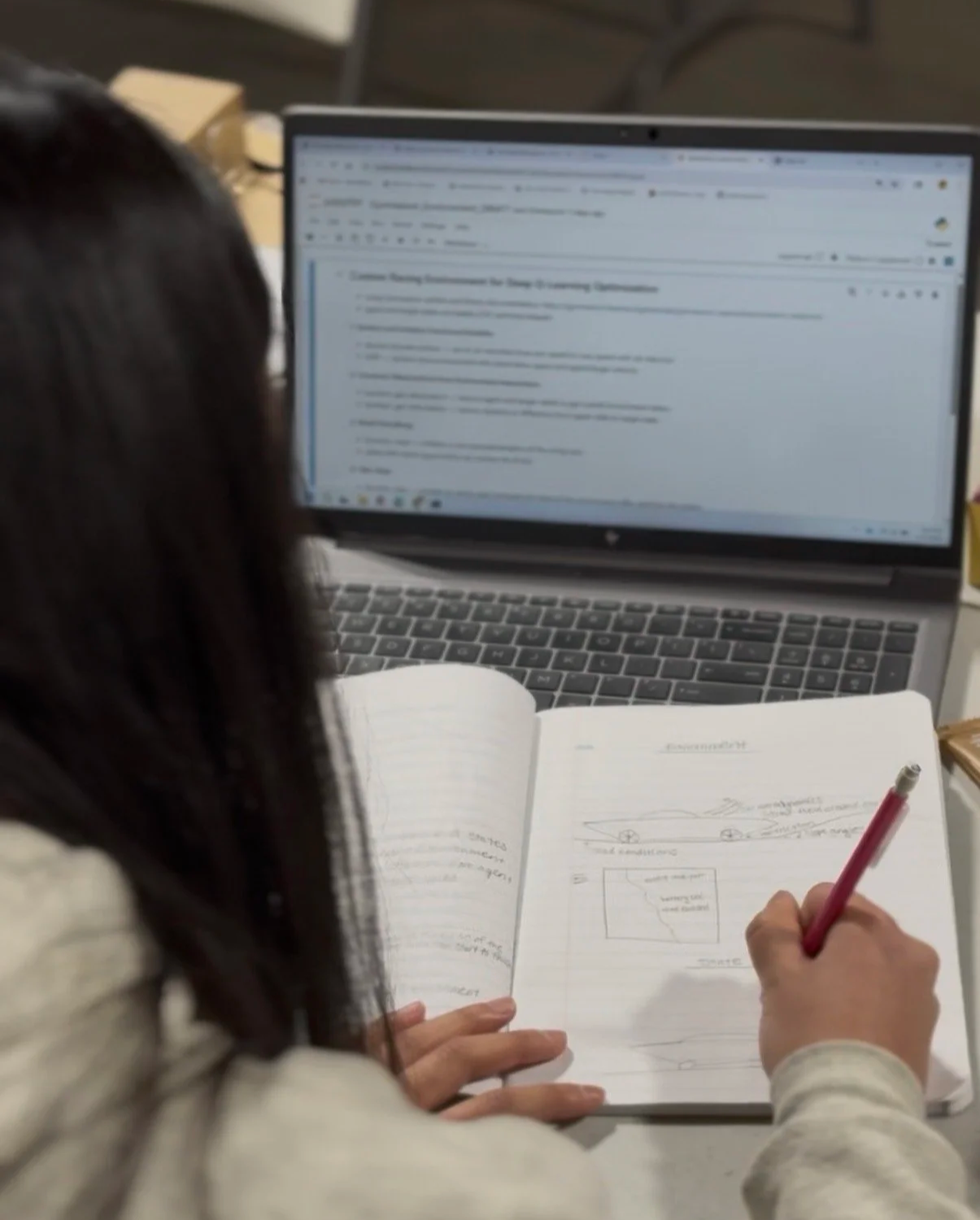
Lily (10) researching and developing our new strategy system to predict and optimize our race through the Outback
The final major challenge our technical teams are looking into is how strategy works. During the summer at SCC, the consequences of messing up a day of strategy is relatively minor. Given good weather and our extremely good solar panels, we can always recharge the entire battery before the next race day. Unfortunately, BWSC does not share this characteristic. Due to longer drive times and reduced solar output due to the season, making a strategic error can lead you to having no battery at the start of the next day. Because of this, we are currently working on better and more advanced race strategy systems.
As we work through many of these new technical projects, we are super excited to share more about the progress of the car, and break down exactly how we are tackling these problems. We will be posting in this blog roughly every 1-2 weeks, and likely more often on our social media platforms. We are super stoked with this project, and can’t wait for the coming weeks!