2019:
The Lean Green Driving Machine
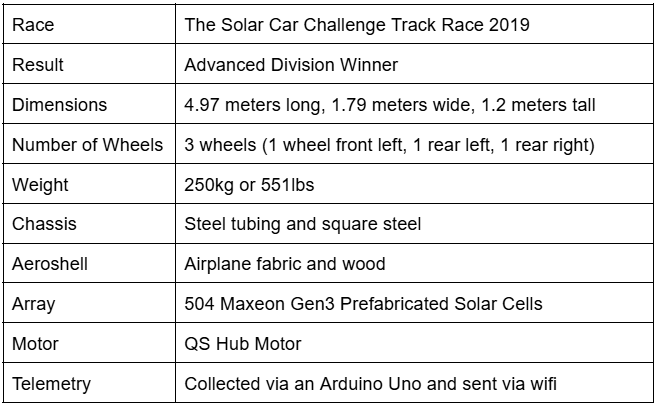
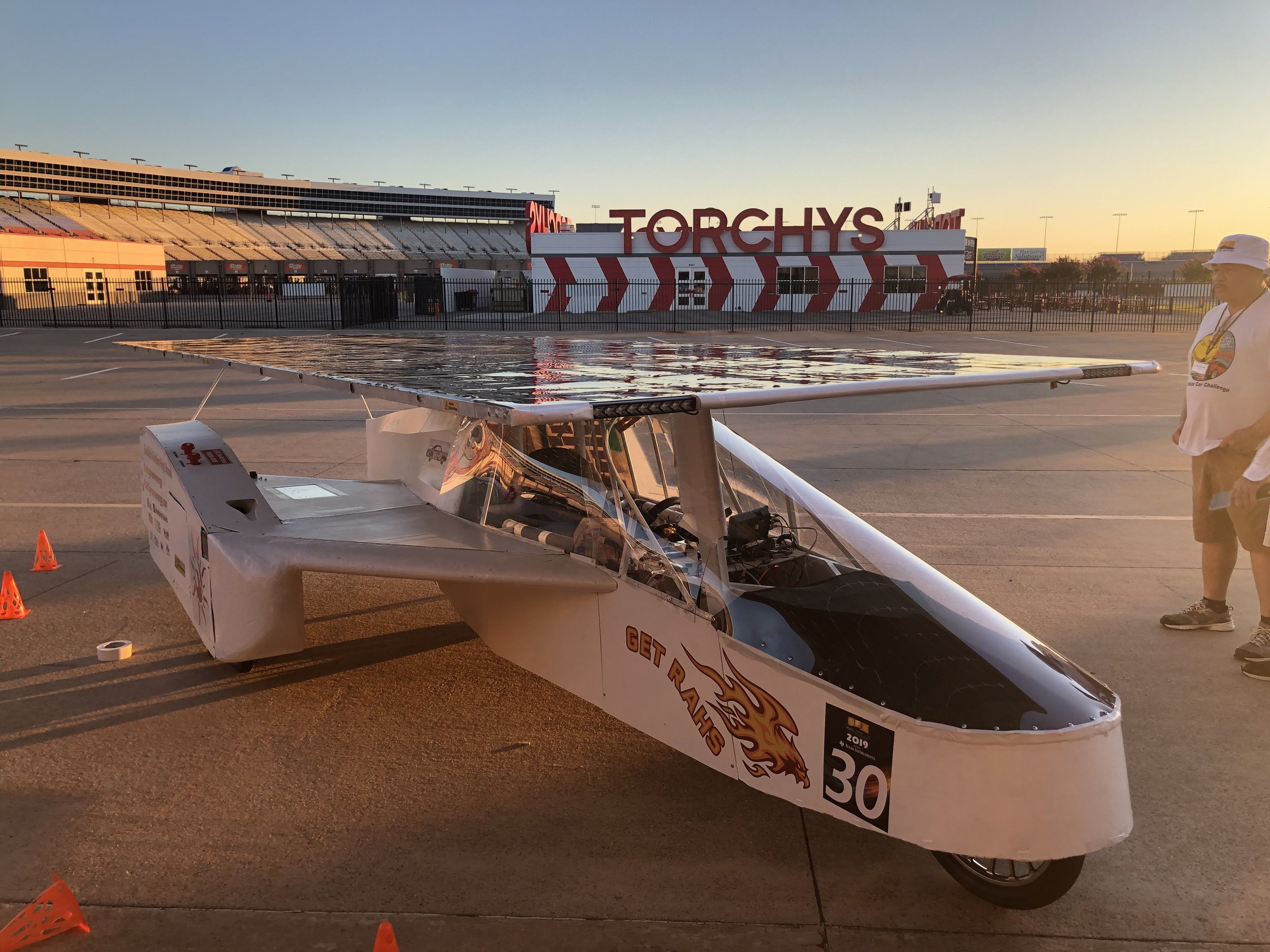
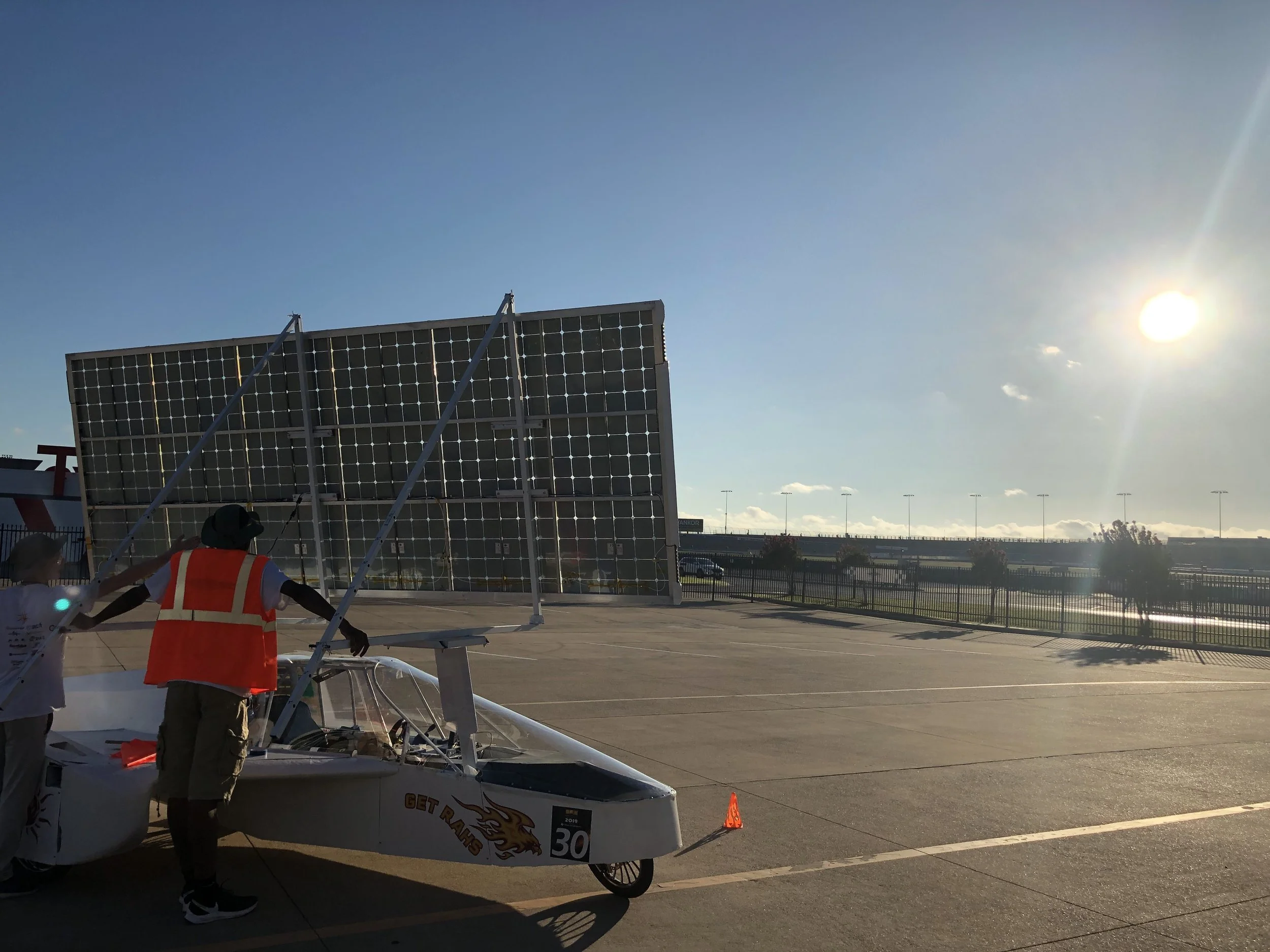
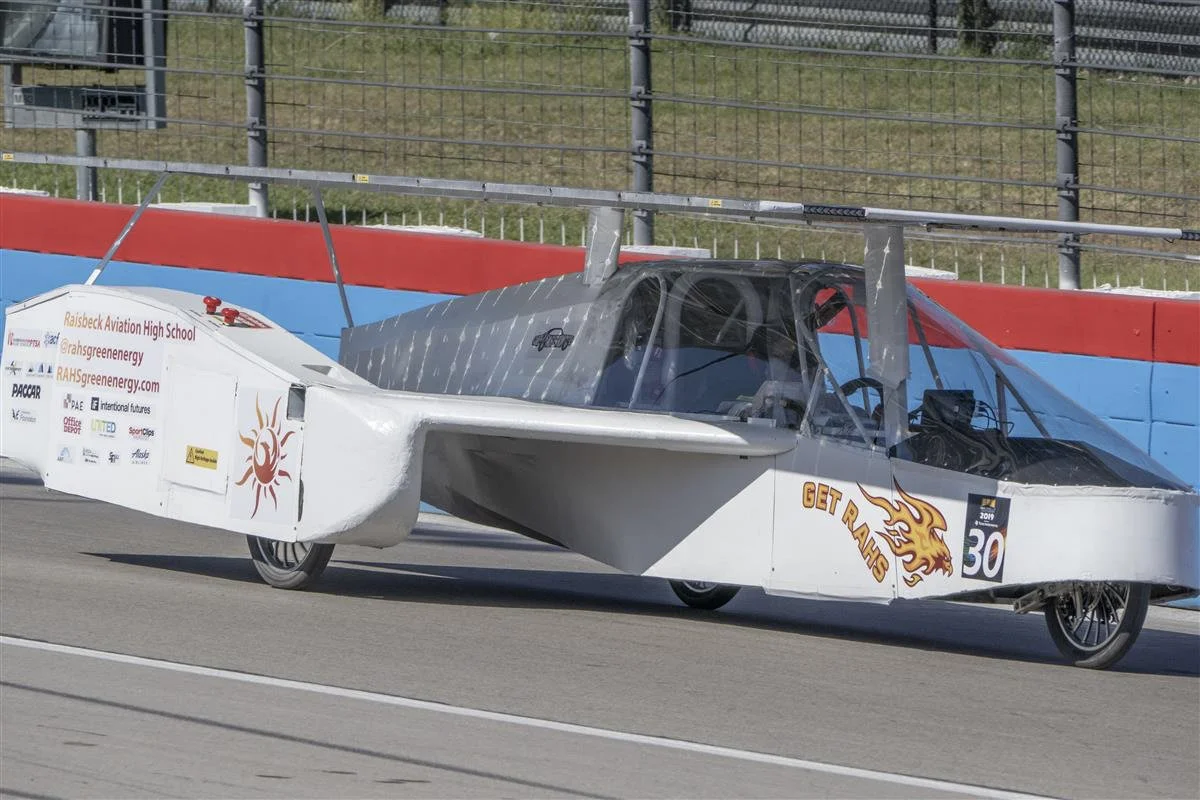
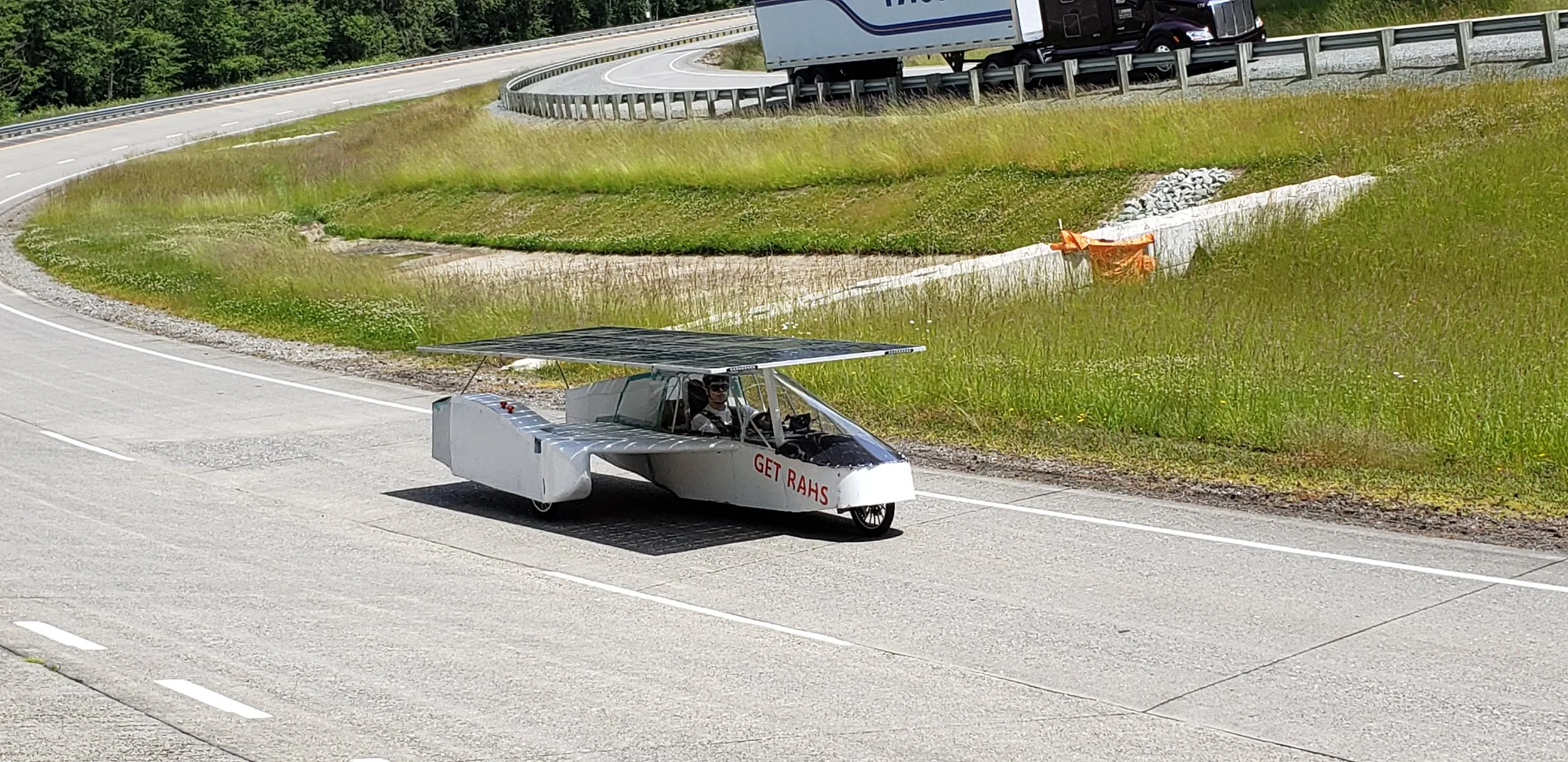
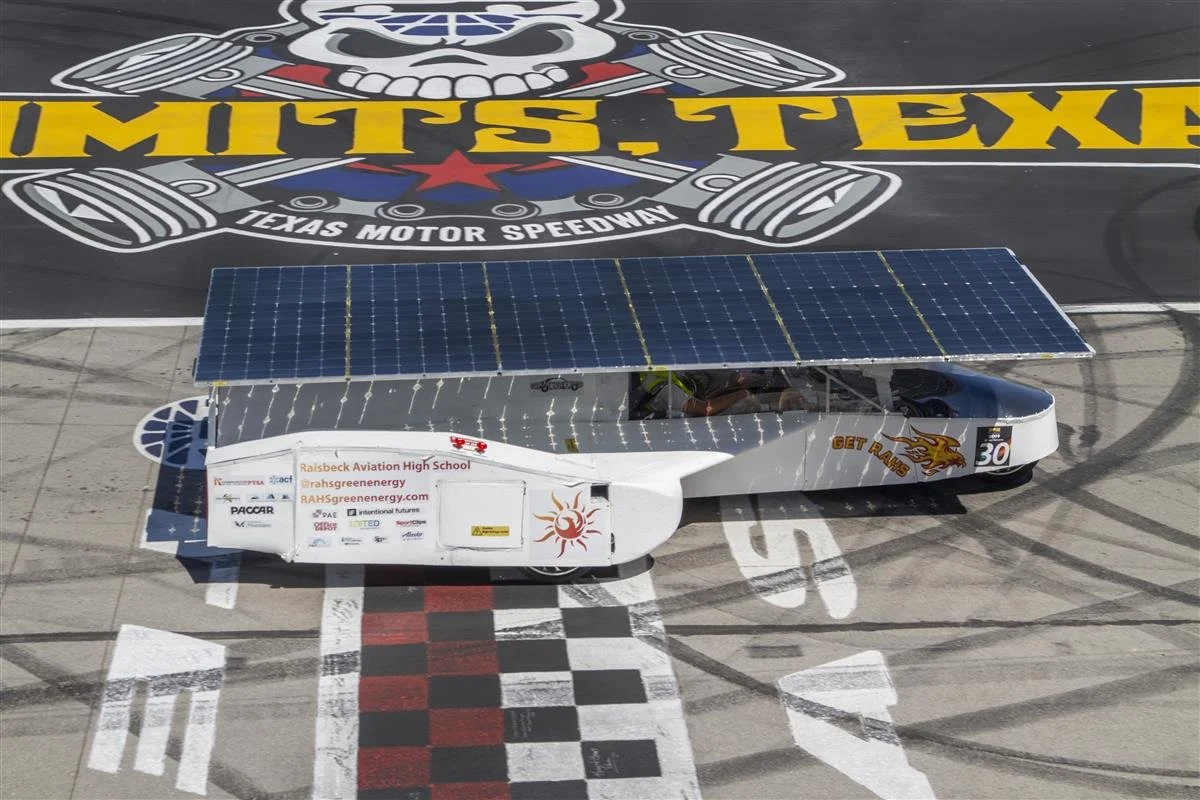
The Lean Green Driving Machine was our team's very first car, built back in 2019. Despite being our first time building a solar car, the team managed to produce a car that not only won the most competitive division during our rookie year, we also set the track record at the time for the most distance in the challenge. How did this work? Despite maybe not fielding the best technology, center to the ideology of this iteration of our team was understanding deeply the principles behind solar car racing, as well as simplifying processes in order to gain more testing time.
Prior to July 2018, our team did not build solar cars. Since 2016, we were a loose group of students who worked on similar green energy projects, but of a different nature: wind. Students from our team participated in the high school KidWind challenge, and after winning for a few years, we stumbled upon a new challenge: The Solar Car Challenge. With the understanding that the team would do something new next year, we left for summer break, thinking about the challenge ahead. During the summer, some members would do research, as well as a visit to the American Solar Challenge and The Solar Car Challenge, before meeting again in September 2018 to start design.
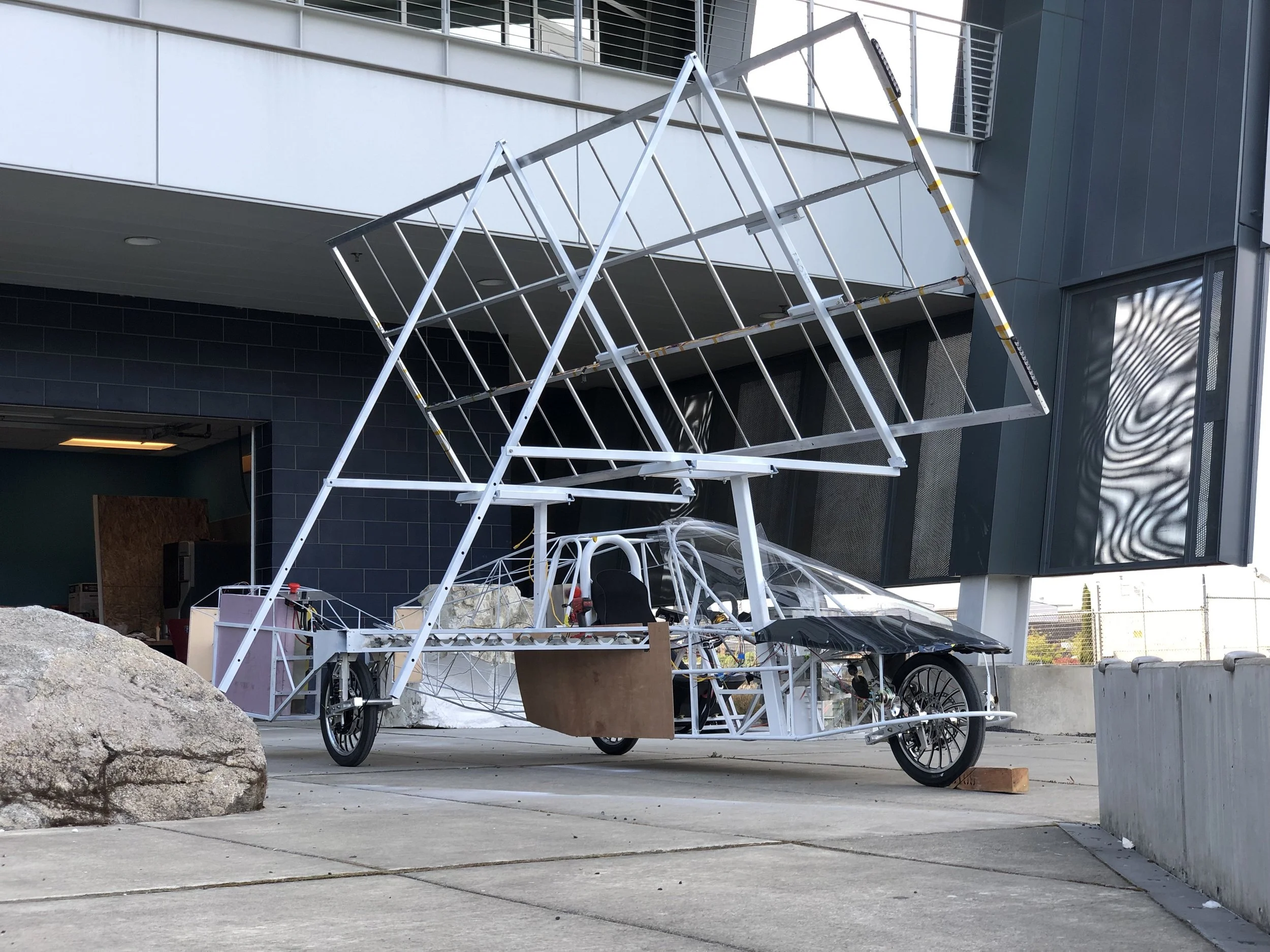
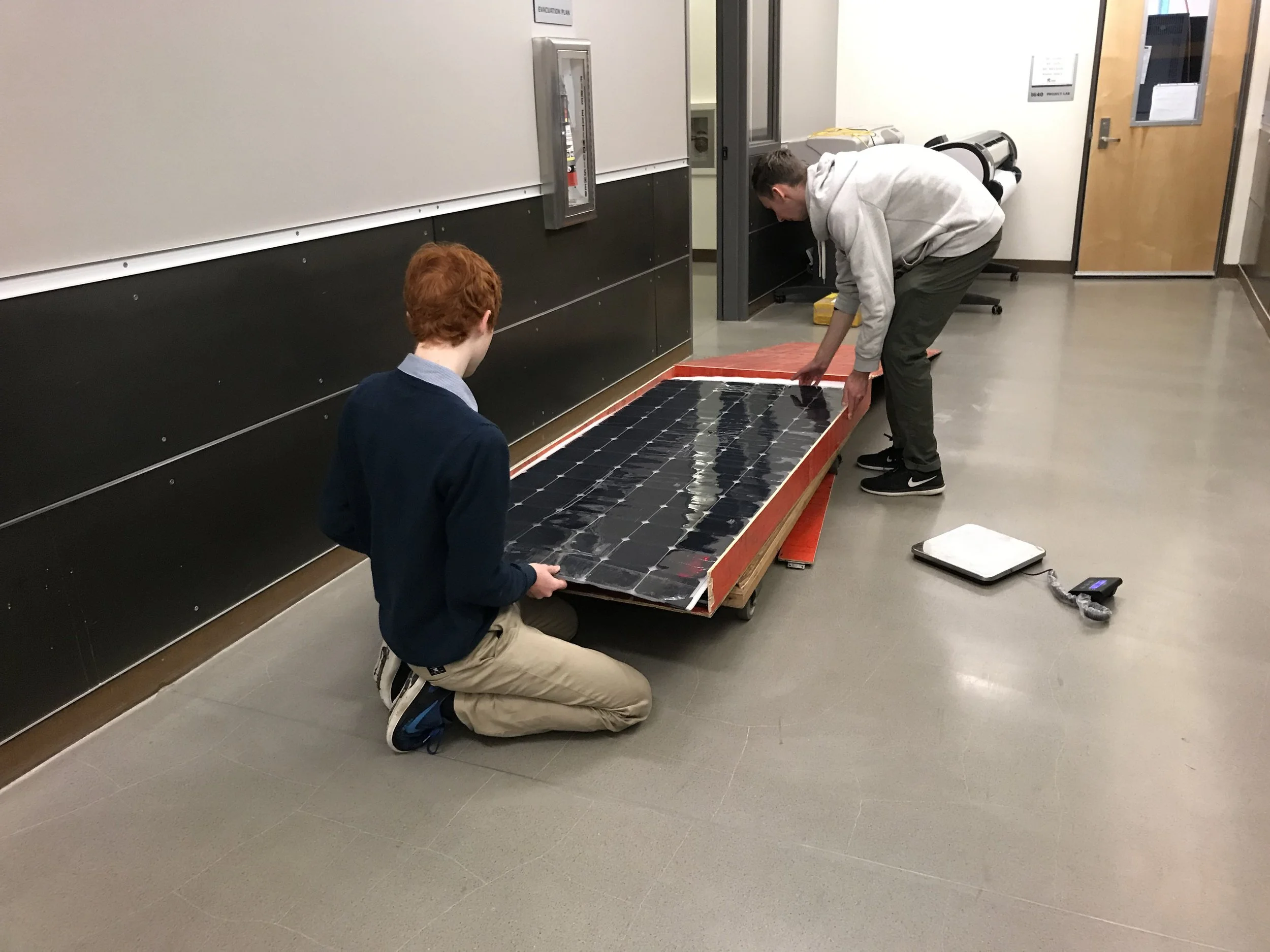
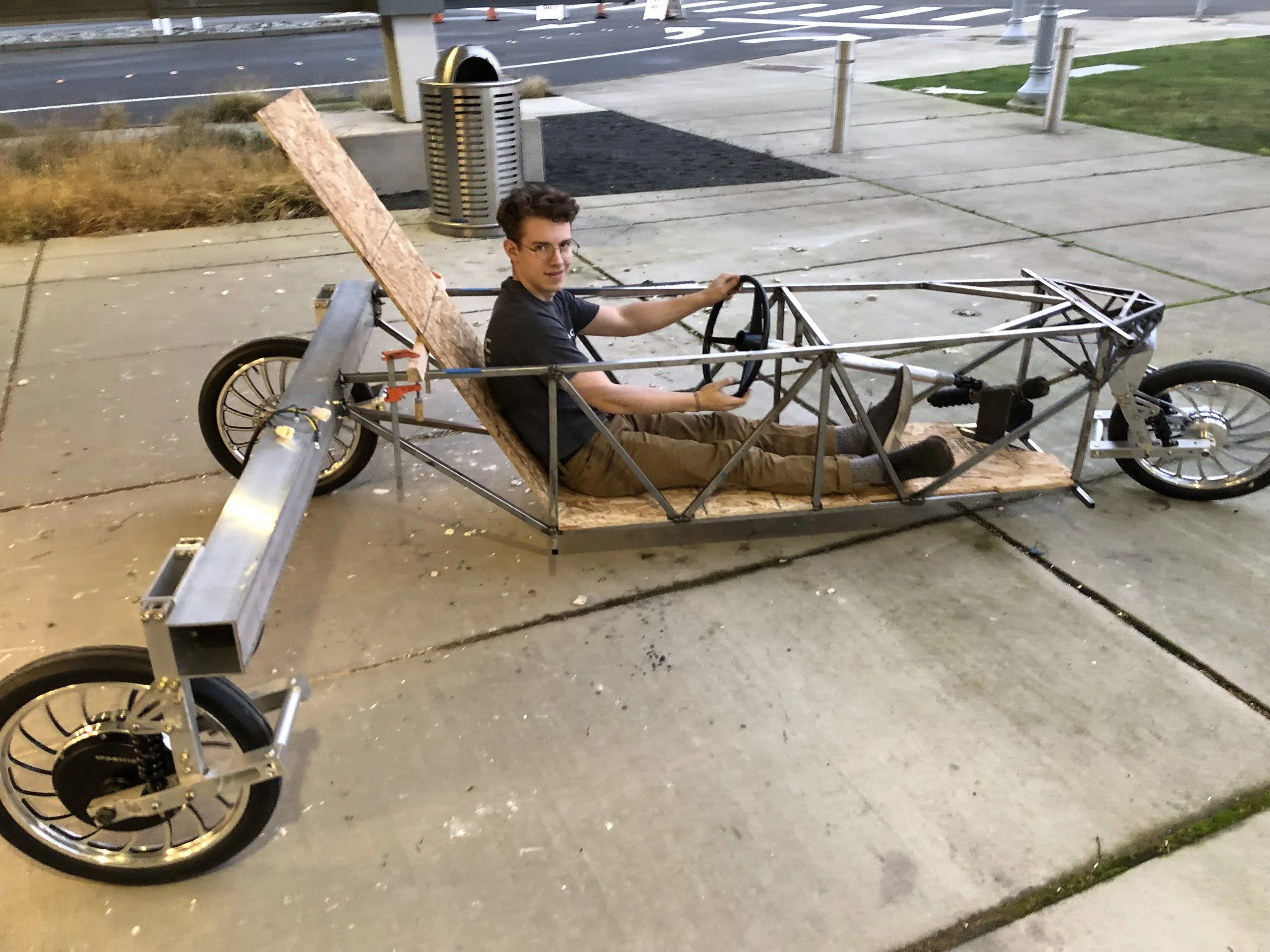
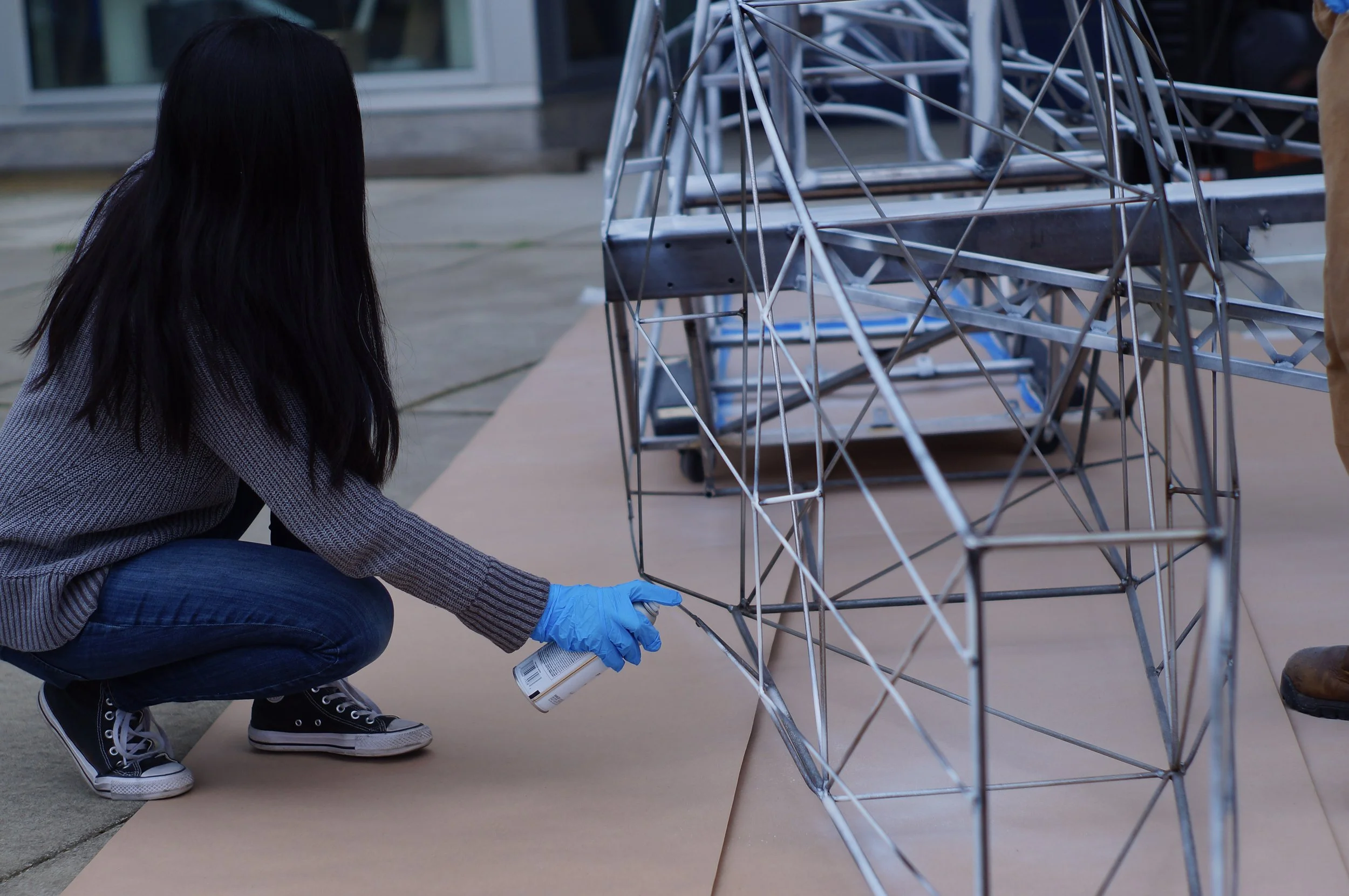
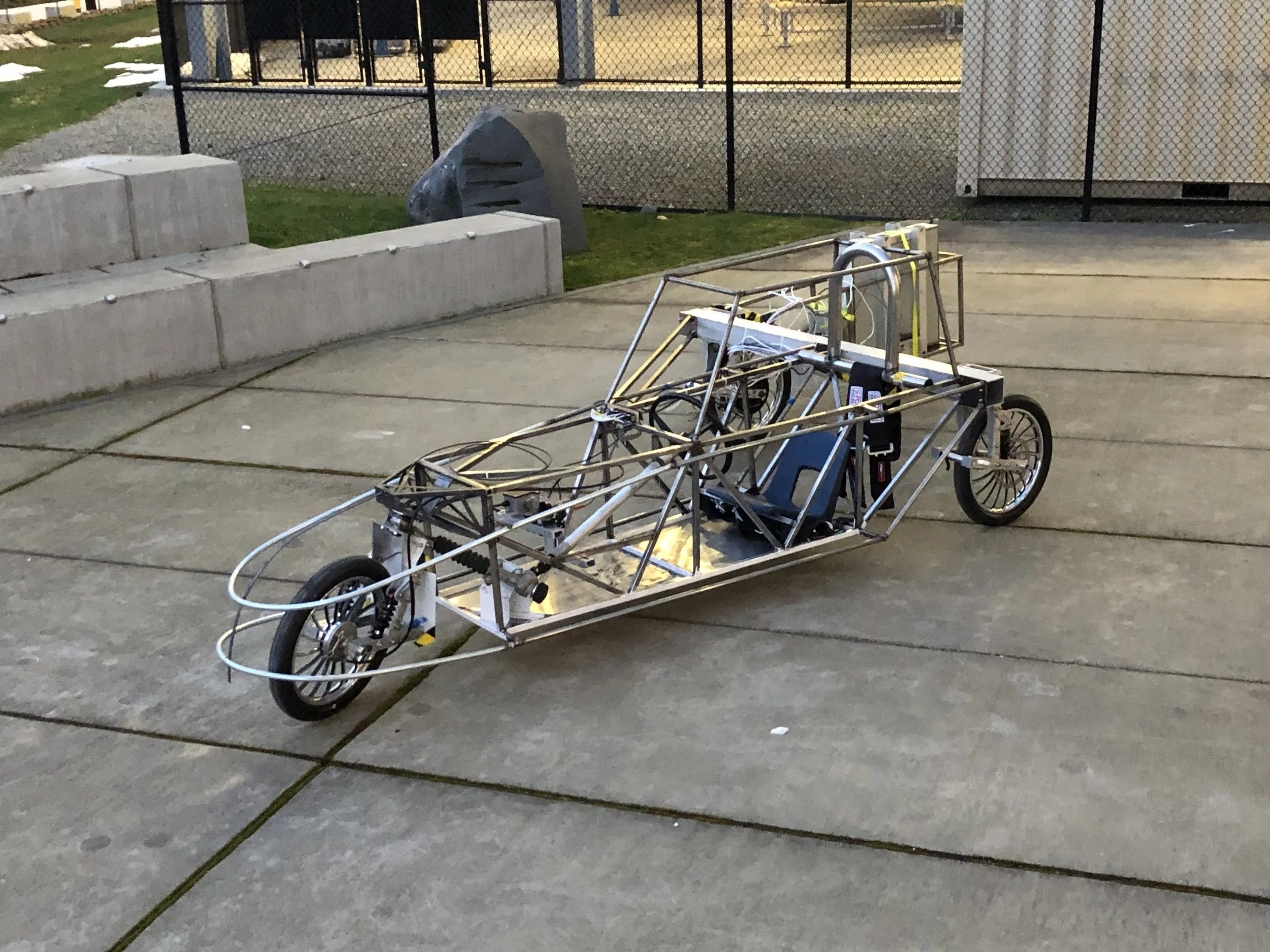
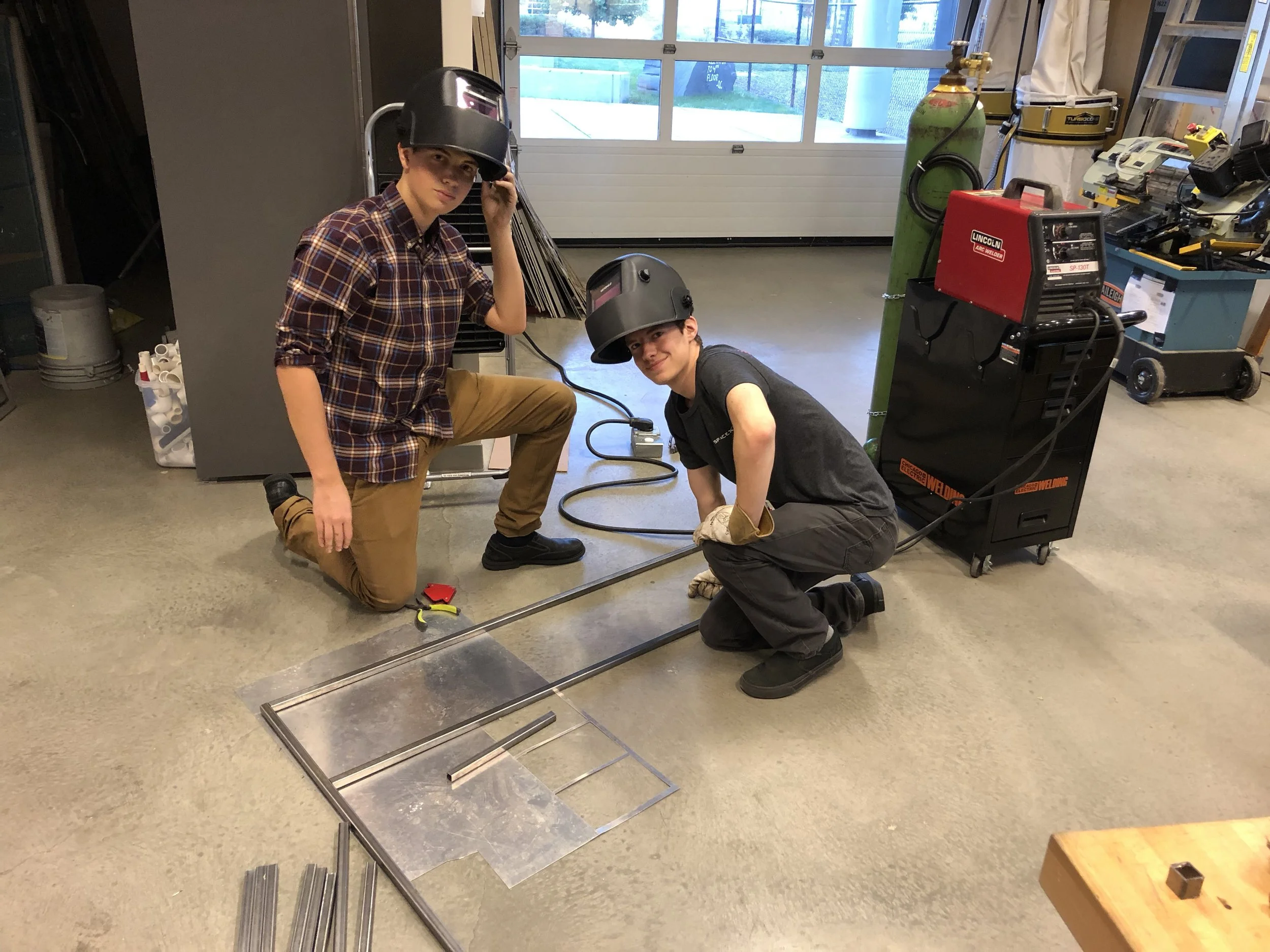
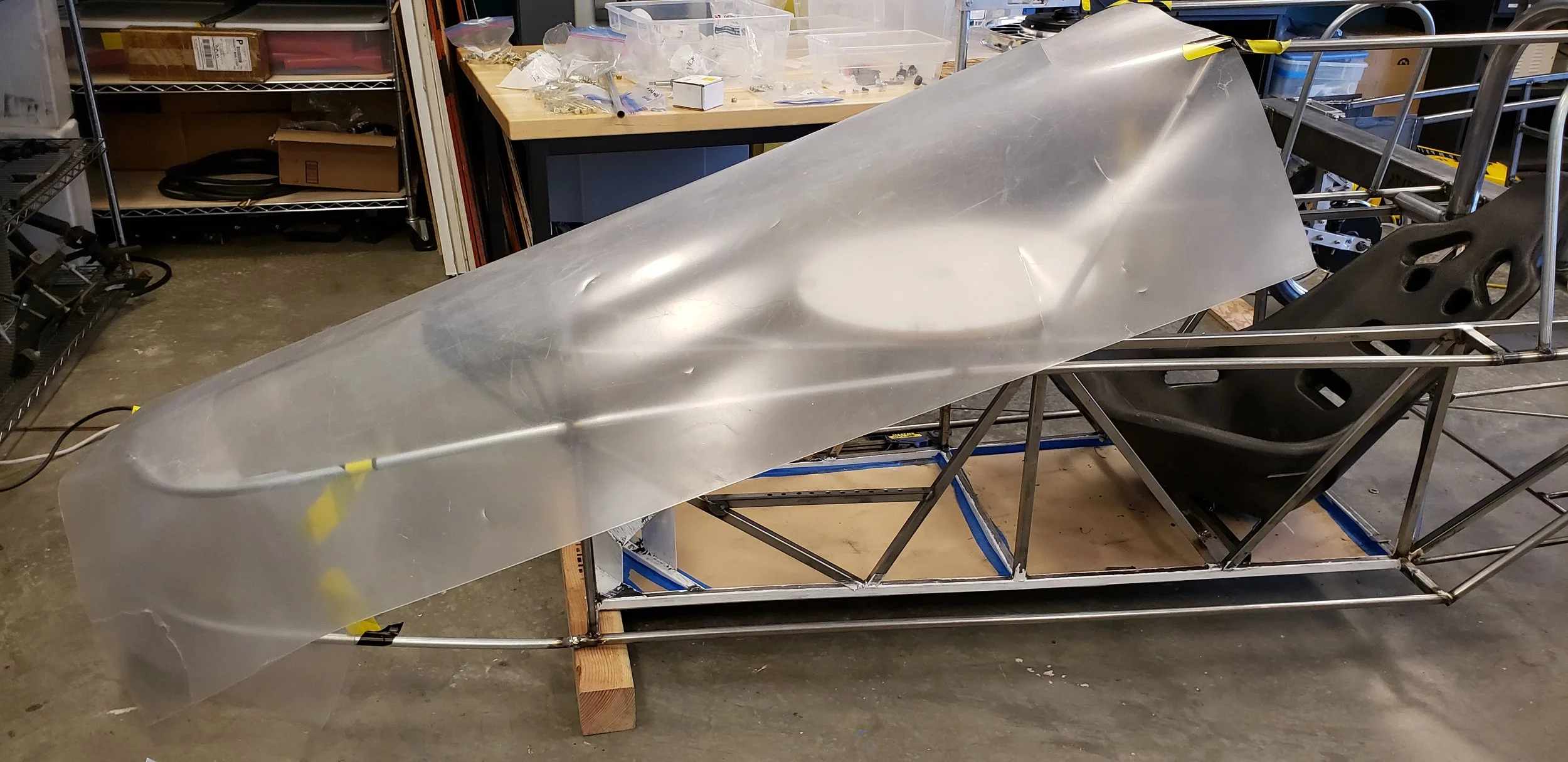
By January 2019, we had started to build our first car. Using steel tubing we started welding together a frame that was inspired by a motorcycle with a sidepod. As far as solar car design goes, it was a rather weird design: one steering wheel in front, two wheels in the rear, with an array over it. The main goal with this design was simplicity. The methods used upped the speed of building in order to get to testing and verification quickly.
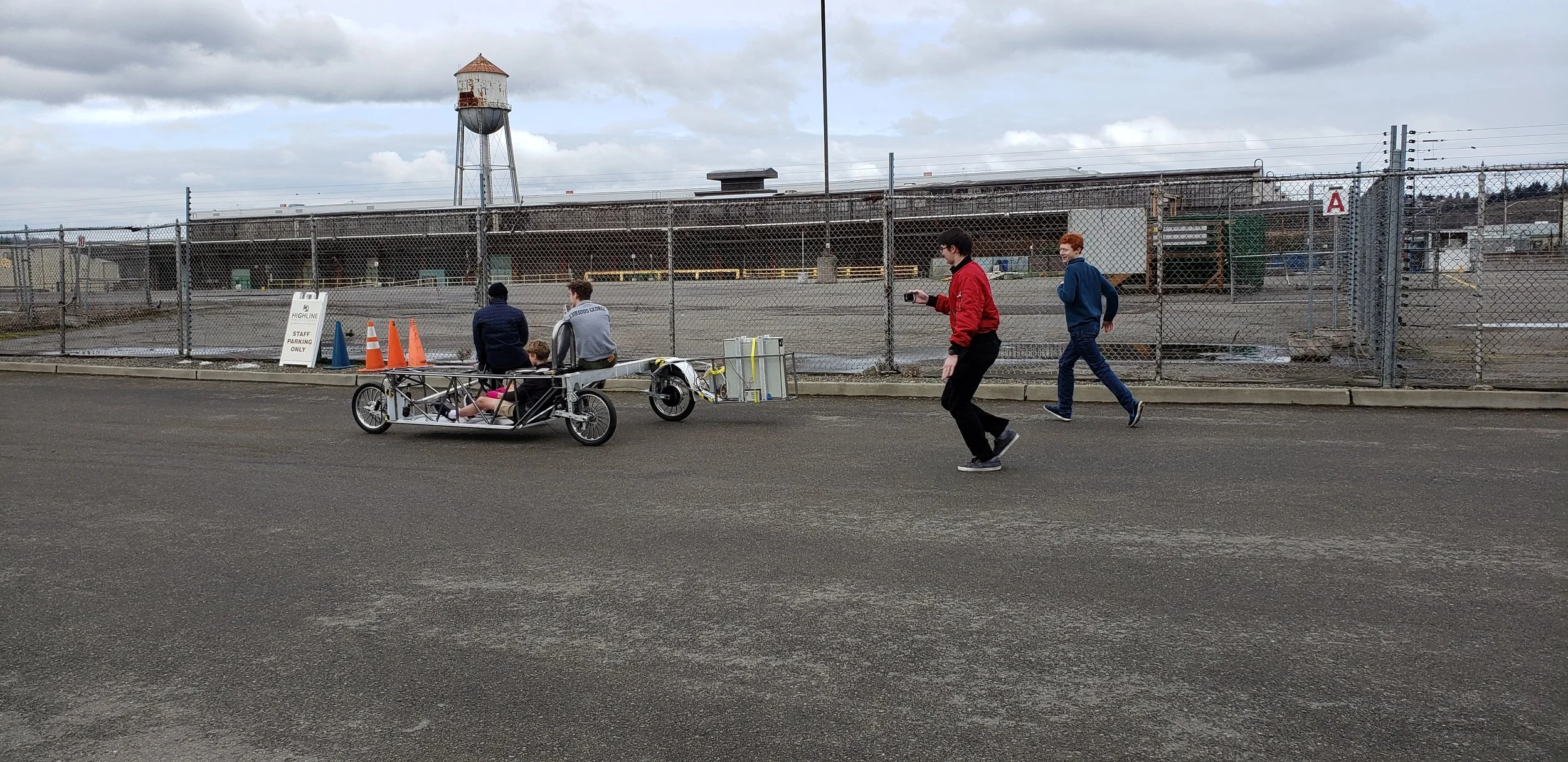
Testing was a cornerstone of this first iteration of our team, and it quickly exposed issues, and allowed for fixes. Before our electrical system was even installed, once the chassis could roll, members would push the car to test balance and suspension, and while problems were found, due to the early testing, they were quickly fixed. As more parts got finished and put on the car, we continued to test. The idea behind this was by getting an understanding of the car, we’d be able to do well in the race.
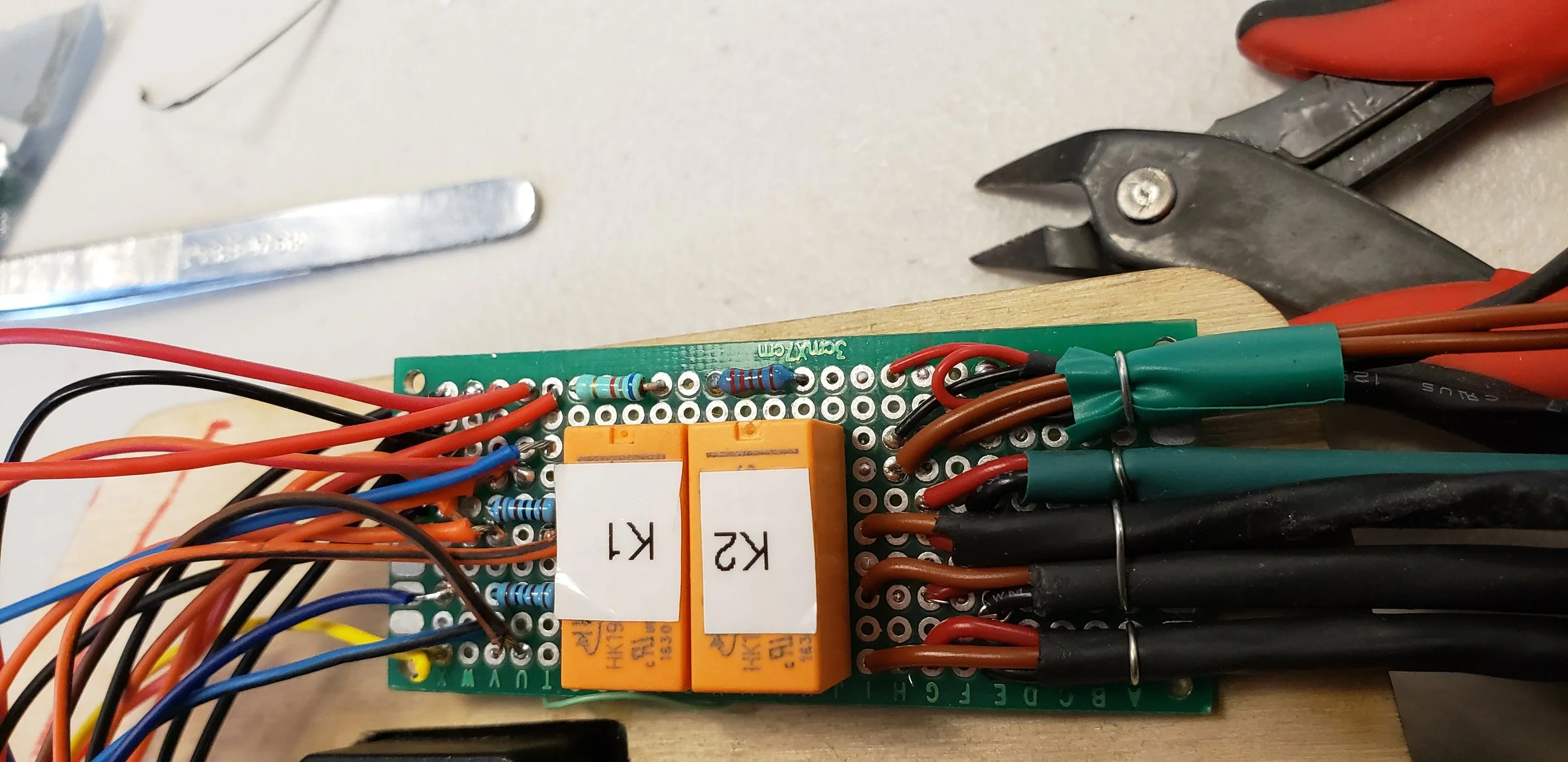
By February the car could drive under its own power, and by April, the main part of the frame and array was complete, although aerodynamics were still not started. By this point though, we’d completed a few hundred of miles of testing, including through snow in the winter, and that number of miles would continue to increase as time went on. In the background, the telemetry system was being made, as well as our first iteration of strategy.
By late May we had begun working on our aerodynamics, and again, it would be simple. Airplane fabric and thin pieces of wood made up the aerodynamics and this kept development time and cost down. By June and early July we were testing on a sponsor’s testing track, verifying the predictions made by the strategy team, while many team members studied to rules and made sure everything was in order. By the time the car shipped out for Texas, over a thousand miles of high speed testing were completed, all systems were checked, and the car was ready to go.
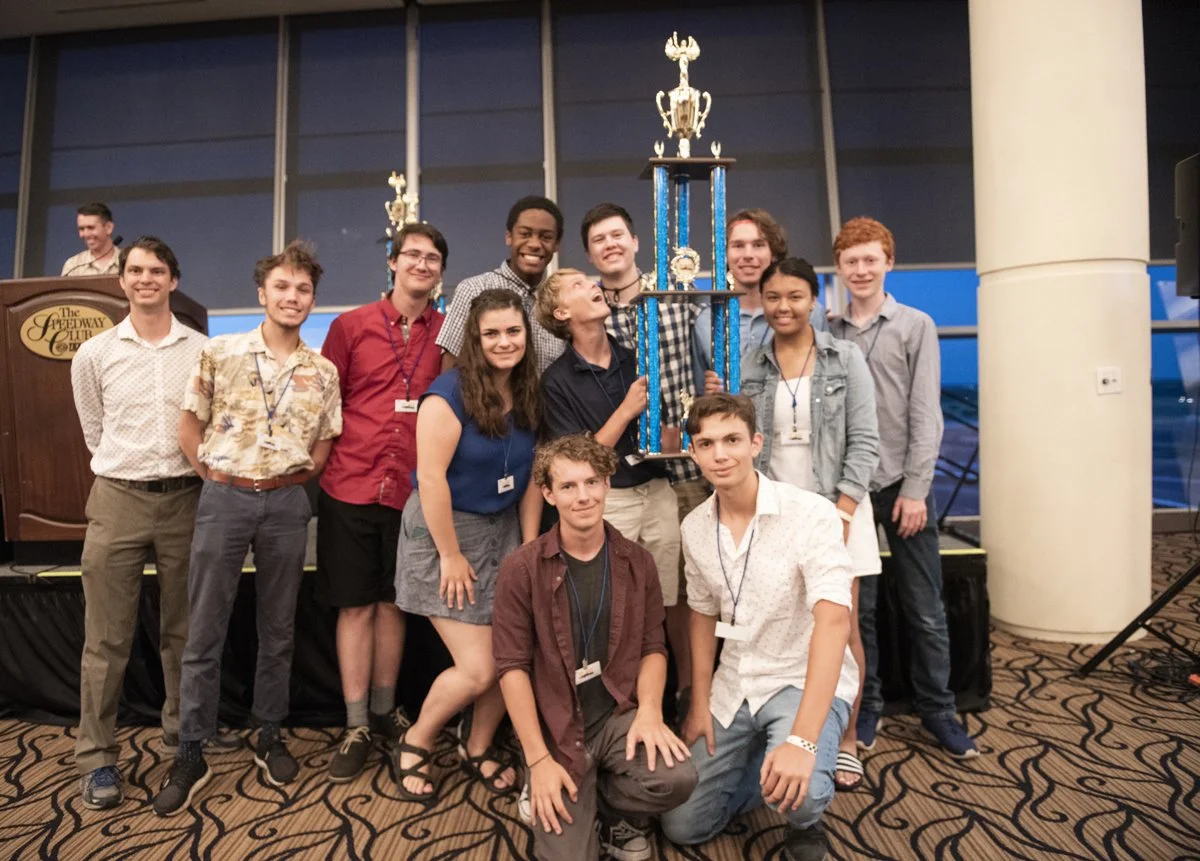
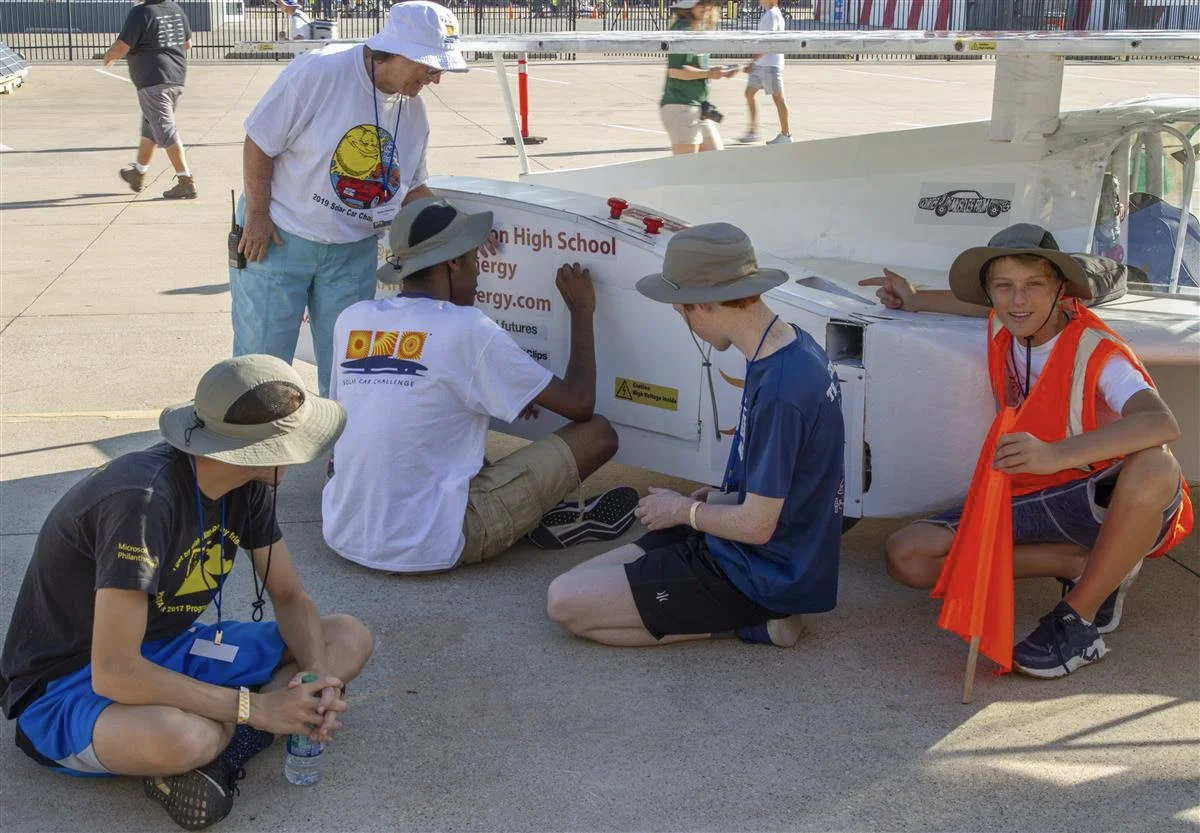
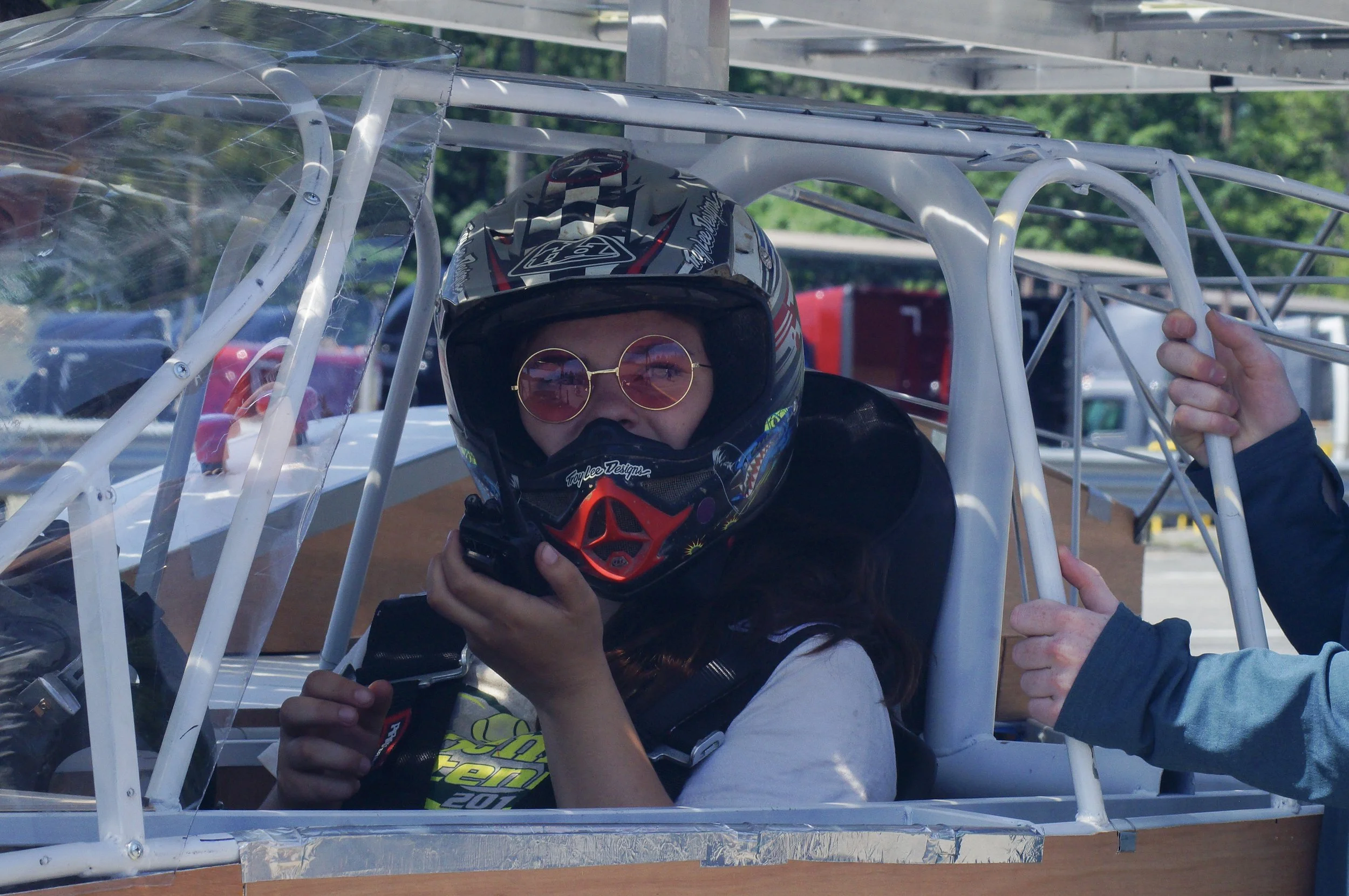
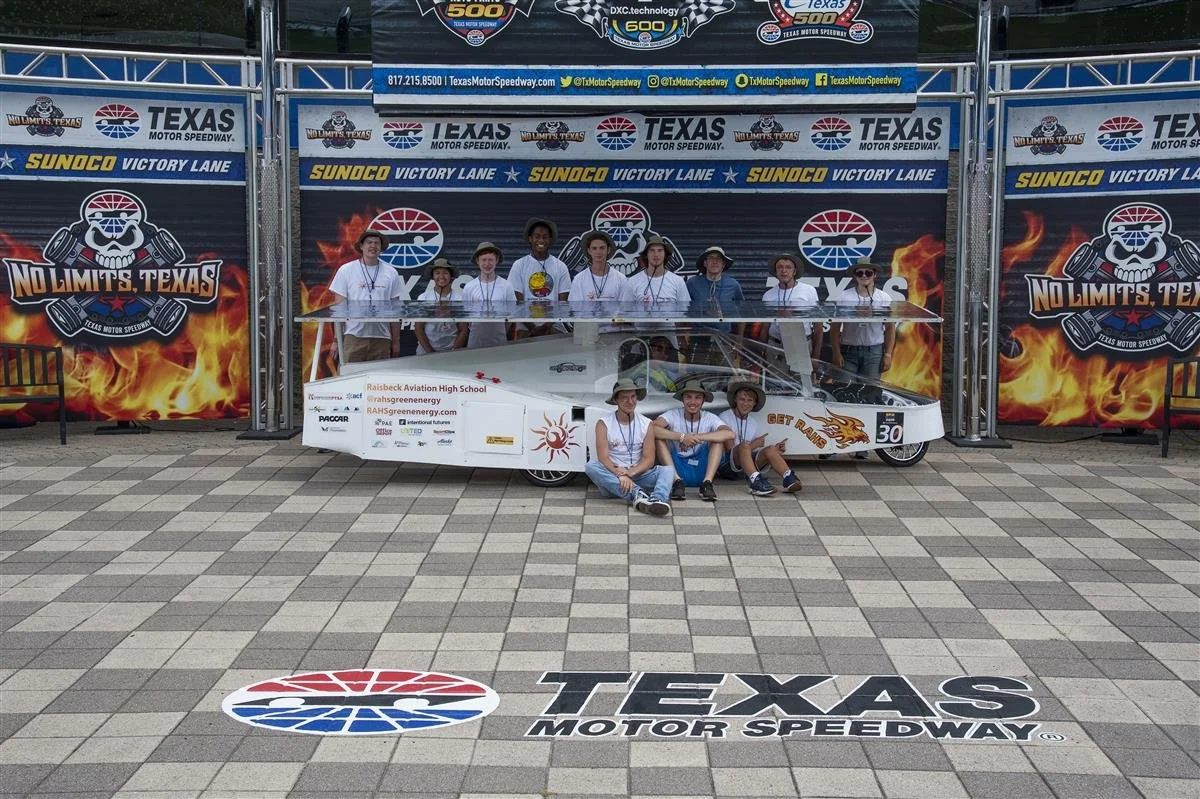
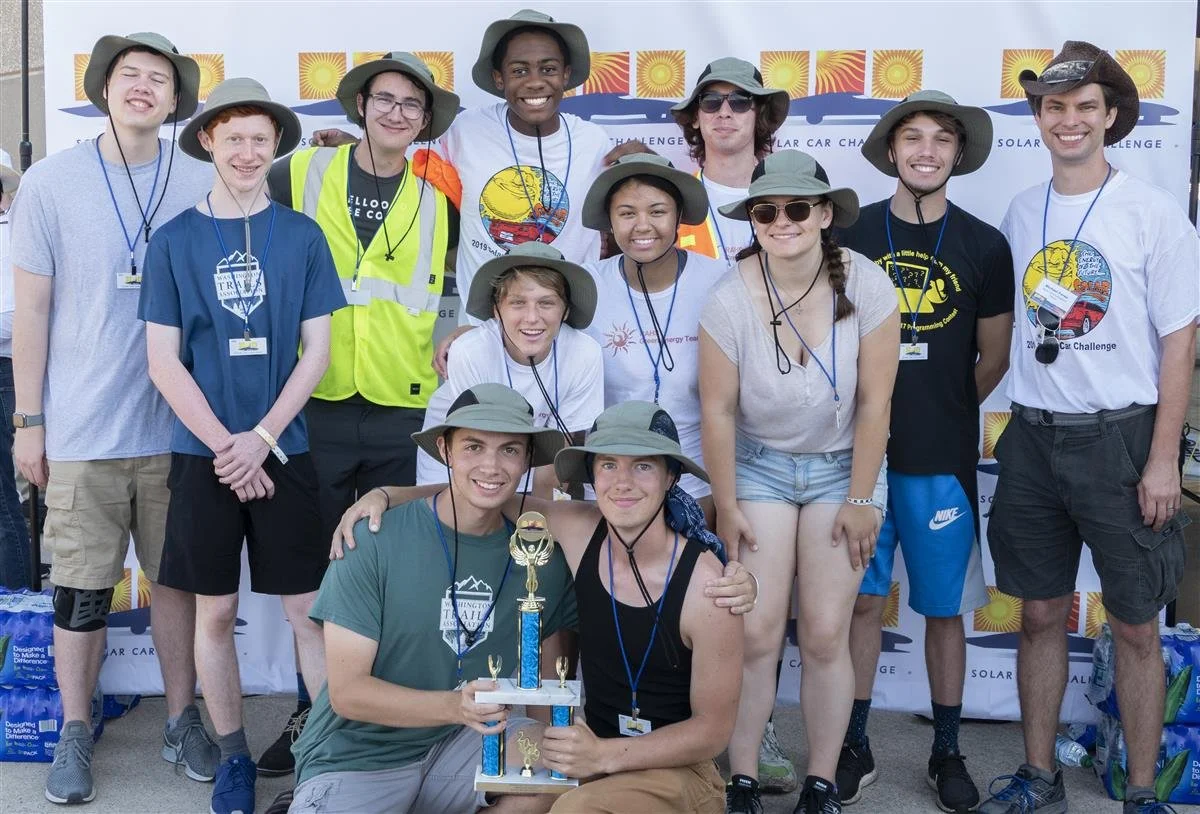
When the team got to Texas, we were positively surprised by just how nice everyone at the competition The team didn’t know what to expect going into competition, and we found an amazing atmosphere, where everyone helped each other, so that everyone could get to the start line. While the team received some odd looks for the design of the car, and the decision to race in the Advanced Division as a new team, it was clear the preparation paid off. Our team led the entire race, winning by nearly 100 miles, as well as setting the lap record for the competition. Backed by the sheer amount of testing as well as an understanding of every part of the car let our team run the car to its potential. While it wasn’t the fanciest or most refined, it worked well. We left Texas, victorious and excited to apply the learning we had done over the past year.
While our first car may not be our most pretty, or most advanced, it is the pioneer for us. The car that laid the framework for how we build our cars: Start simple, understand the problem, and test to the limit. It pushed forward everything, and was the first step of our journey into a larger world.
Setting the framework…
Offset Three Wheel Design
In order to reduce the complexity of a steering system, we opted for an unusual wheel configuration, most similar to the Delta configuration (1 wheel in front, 2 in back), but this one had the front wheel offset to the side as well. This led to a decently aerodynamic structure, but also had weight and balance issues solved through placing the motor and the battery as far back as possible.
Airplane Fabric and Wood aerodynamics
The aerodynamic elements of this car were built using a material called airplane fabric, stretched around the steel chassis. Chosen due to low complexity and low cost, this was a good option for us during our first year. Wood was used as side panels on the straight sections as to reduce costs even further.
Testing Procedures
One of the more important things we learned this year was how to test the car, in order to address possible issues with weight and balance, aerodynamics, durability, as well as just shakedown testing. This procedure and the lessons learned from it would help guide future builds.
Telemetry System
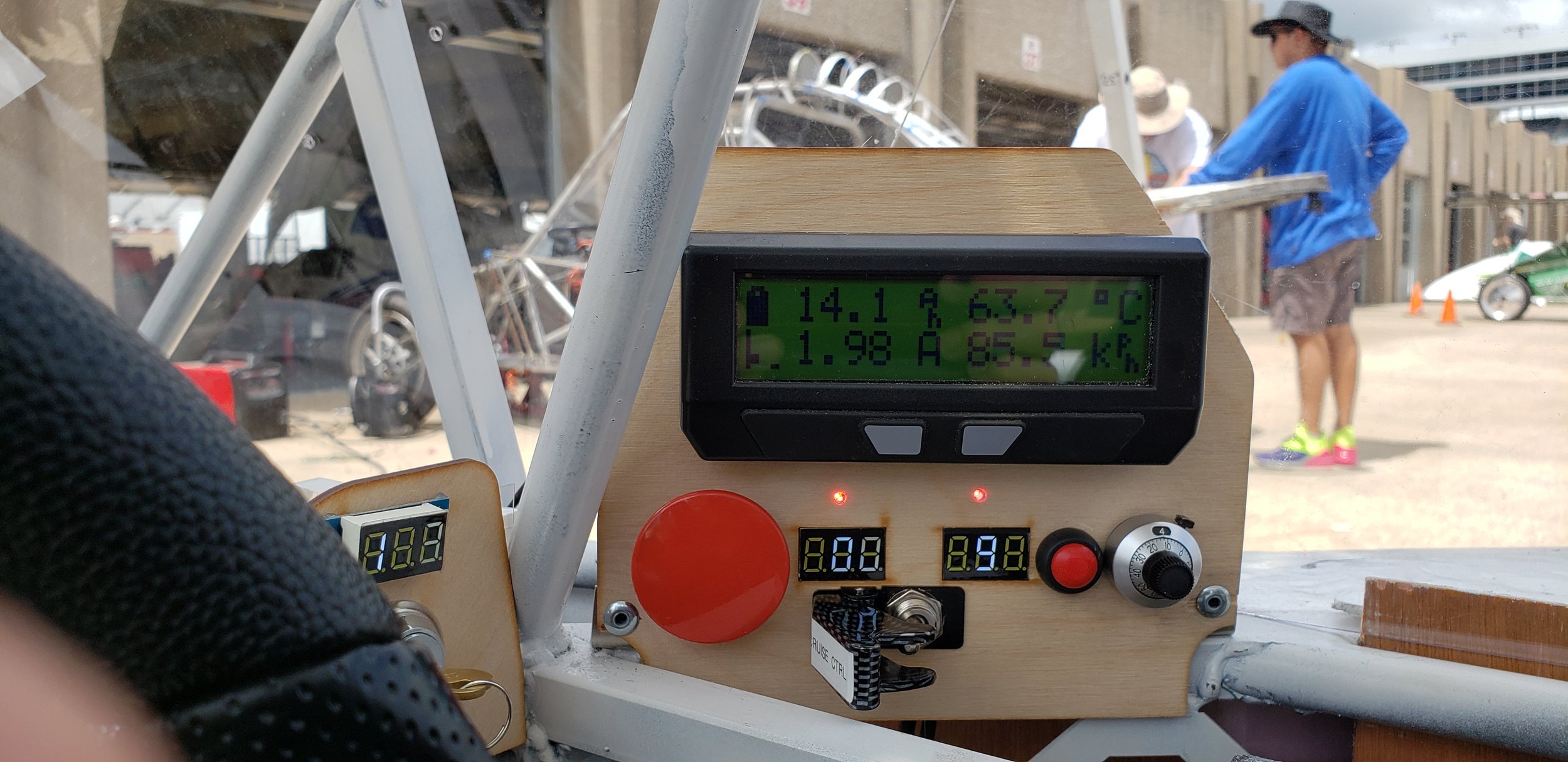
Very early on, we learned of the importance of telemetry. A lot of development was done on this car in telemetry, much of which would be reused on future cars (notably Jimmy and La Cucaracha). With hardware based around a Cycle Analyst and phone network Raspberry Pi telemetry, we developed our grafana based visualization system this year, allowing us to evaluate the car and collect good data.
Strategy Simulation
The other major point of development for us during this period was strategy. Starting from scratch, we implemented software and simulations for the entire race in order to determine speeds and how to drive on the track. This included sun, weather, efficiency, and drag models, much of which contributed greatly to this car, as well as the next iterations of strategy and racecraft from our team.